Beware of Bad Bible Reading, #1

"Look at the nations, and see!Be astonished! Be astounded! For a work is being done in your days that you would not believe if you were told." -Habakkuk 1:5

Eugene Peterson has said that "an enormous amount of damage is done in the name of Christian living by bad Bible reading."* I'm convinced he's right. We are often well-intentioned in our efforts to be biblical in our thinking and living. But, if the ways we go about attempting to be biblical are misguided, the result of our efforts can be futile–at best–or even harmful, as Peterson mentioned.

There are many ways that we can read the Bible badly (and Scot McKnight does a fantastic job of identifying them and proposing an antidote in The Blue Parakeet), but there is one in particular that has caught my attention lately. In a way, it's an opposite of what I have tried to point out with the Scripture Plaques You Won't Find at the Christian Bookstore. Whereas those are typically passages of scripture which we ignore because they don't fit the kinds of things we want the Bible to say, what I'm trying to get at here is how we see things we want to see in a passage and end up taking it to mean something that it never meant.

One common example of a passage of scripture you may have likely heard read badly is the story of the widow's mite, which I've already written about as The Most Abused Poor Widow in History. We isolate a passage and then think it says something (which we probably want it to say) and therefore miss what it really says.

The verse above from Habakkuk is a lesser-known example, but a pretty drastic one.

I remember the verse from a time that an inner-city ministry I visited was using it as their theme. They had nice graphics printed, with an image of their city along with the words of this verse. It appeared that they were hanging their hats on that passage as a promise, in the hopes that God would do astonishing things in their city as he had promised to do in ancient Israel through the prophet Habakkuk. I liked the verse and their graphics so much that I kept their materials and used them as a bookmark.

And then, years later, I read Habakkuk. Apparently the person who chose the verse didn't.

The preceding verses in the first chapter of Habakkuk are a plea to God from Habakkuk, essentially lamenting all of the terrible things he sees happening and that God is doing nothing about them. Then, the verse quoted above is the beginning of God's response. If God's response had ended with that verse–fine, we could go ahead and use it for our themes, and I could keep my slick-looking bookmark. The problem is that when we read the remainder of God's response to Habakkuk, we can summarize it (including verse five) as, "You think it's bad now? I'm about to devastate you so thoroughly at the hand of the Babylonians, that you wouldn't even be able to believe it if someone were to tell you."

Oops. I'm quite sure that is not what that urban ministry was trying to wish on its city.

Even though this example is a bit comical, it highlights a major difference between the ways that we often read the Bible–particularly the Old Testament–and the ways that we could read it for what it actually is, which would obviously then make it more likely to have its intended effect on us.

We like to look for verses. We like to know the book, chapter, and verse for God's promises to us. The problem with that approach is that the books of the Bible weren't written in chapters and verses, so we end up lifting a verse we like out of the story of which it was a part, and we can then take it to be something we want it to be whether it was meant to be that or not.

A better approach is to get to know the overall story. In this example, I should have started with reading Habakkuk, rather than just hanging on to the cool bookmark (which, ironically, made me feel biblical while proving me not to be). Then, if I got to know the rest of the story, I would be able to place Habakkuk in the overall story of God's dealings with Israel and the world as they're recounted to us in the Bible. And then, when I come across the more familiar verses from that little book, (like 2:20: "the Lord is in his holy temple; let all the earth keep silence before him") I'll be able to place them in their context, rather than just thinking, "Hey, that sounds nice. Let's print it up!"

*See Eugene Peterson, Eat This Book, p. 82.

Wait Prayerfully: A Guide to Prayer for Advent

Wait Prayerfully Cover Shot Print-Kindle  

Advent is a time when Christians all around the world practice waiting prayerfully on the Lord. We remember the prayerful waiting of God’s faithful people for the Messiah to come, and we remember the calls to be watchful as we wait for his reappearing. This guide will assist you in preparing your soul for Christmas this year by helping you to wait prayerfully.

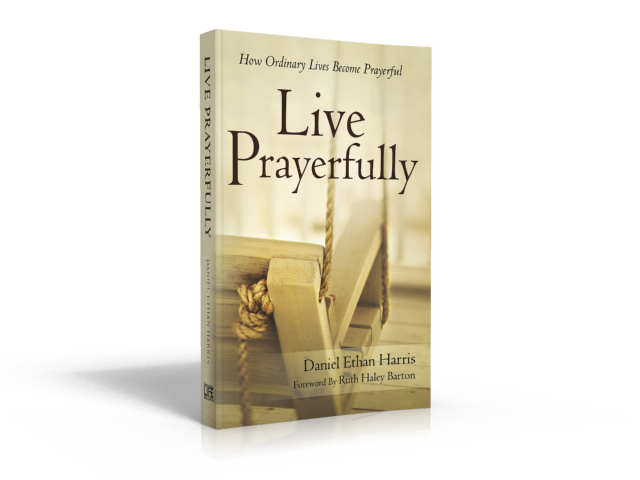
Designed to be useful on its own or as a companion guide to Live Prayerfully: How Ordinary Lives Become Prayerful, this book leads the reader into ways of praying with other people’s words (based on prayers adapted from The Book of Common Prayer, praying without words, and praying with their own words, including scripture readings, hymns, and prayers which are particularly helpful during Advent.

Now available in print and Kindle editions.

Click here to see all titles available from SalvationLife Books.

Two New Resources Coming in November from SalvationLife Books

I'm excited that two new resources will be available in November 2013 from SalvationLife Books:

  • Follow: 40 Days of Preparing the Soul for Easter contains daily readings and prayers for the season of Lent. (This will be the published version of last year's 40 Days of Prayer series.)
  • Wait Prayerfully: A Guide to Prayer for Advent is designed to be useful on its own or as a companion guide to Live Prayerfully: How Ordinary Lives Become Prayerful.

Both of these titles will be published in print and Kindle editions and will be available through this site and Amazon.com.

Wait Prayerfully-Follow Cover Shot

In Memory of Charlene Hendrix

My wife and I–and many others–lost a friend over the weekend in Charlene Hendrix. We attended her funeral service this morning after having had a very enjoyable visit with her less than two weeks ago. She knew that she was dying of cancer when we visited her in her home, and perhaps she knew that the time might have been this close, though we sure didn't. My comment to my wife when we left her house was, "I've never seen a dying person smile so much." I've heard it said that by age 40 or 50, we all have the faces we deserve, and Charlene's smile at age 81 even while being eaten up by cancer was like few that I've seen at any age, and it was fitting since it reflected a remarkable degree of "the life that truly is life" which was in her for decades.

The first time I remember meeting Charlene was when she took a class I was teaching on Wesleyan theology. She loved to learn, and never gave it up. It wasn't long after that class that I began writing on this blog, and Charlene was one of my earliest encouragers. I used to have something in the sidebar that could display the people who had commented most often, and her name was always on the list. We never forget the people who have really believed in us and given us encouragement when we needed it, and I will not forget hers.

Every one of us is currently in the process of becoming the kind of person we will be when we arrive at our deathbed. The decisions we make today inevitably push us toward becoming some kind of person then, so we are wise to pay attention to the course which that process and those decisions are taking. Charlene lived that process well, constantly filling her mind with things that nourished her soul–whether reading the Scriptures or taking photographs in nature, practicing habits that were conducive to God's life growing in her, and engaging in relationships with others that helped her to continue to grow and through which she could be a blessing.

James Bryan Smith has said, "the true sign of sanctity is not seriousness but joy," and I want to follow the kind of road Charlene followed for so long, one which will naturally leave me like her: someone marked by a joyful confidence in God.

FAQ for Live Prayerfully Online Class

I am eagerly looking forward to launching an online class based on Live Prayerfully on Monday, October 7. The four-week class will be a helpful experience for everyone who participates, as we will each dig into the chapters of the book together through discussion online, experience the three ways of praying described in the book by experimenting with them in our own lives, and be encouraged by reading the thoughts and comments of our fellow participants as we all do the same things together. In talking about the class with a few folks, I thought an FAQ section might be helpful (if I left anything out, please let me know in the comments):

Will there be any tests?

No tests, papers, or grades. Perhaps I should find a better term than "class" to get rid of the academic associations that come to mind for many of us, but I haven't thought of anything that fits better yet. It will consist of reading the chapters in Live Prayerfully, practicing prayer in the ways described there, and then processing our experiences together through online discussion.

Do I have to be online at any certain times?

No, you can participate according to your own schedule. Since the class consists of online discussion, when you will log in and participate is completely up to you. The only effect that time will have on the class is that the topics we discuss will change by week.

Will there be any videos to watch?

No–just reading the book and discussing it online.

How much work will it be?

One of the things I have tried to emphasize in the book is that learning to live prayerfully isn't something that is burdensome and adds a lot to our schedules and to-do lists. Rather, many of us already pray in some way, and I don't think it takes any more time to pray in the three ways we'll explore together than it does to pray in just one of them. So, experimenting with the ways of praying in the book will be the majority of the "work" for the class. The only other expectations are that you will read the chapter we are discussing each week, respond to one discussion question, and reply at least once to someone else in the group.

Is it worth the money? Can't I get the same information through the book, without the extra cost of this class?

Up until now, my favorite setting for teaching on this content has been on retreats. I think this class will be just as helpful to everyone, with less expense and no need for anyone to travel.

While the chapters and prayer guides in Live Prayerfully are the main content that we'll look at together, the book alone can't provide a couple of things which this class can: First, covering the chapters according to a week-by-week schedule makes it much more likely that we will practice prayer in the ways described. (I've read a lot of books which had suggestions I liked, but never really tried. This format will help us overcome that tendency.)

Second, connecting with others who are seeking to connect with God is indispensable, and an online class is a great way for people to help one another make progress in our lives with God. I really enjoy the dynamics of online discussion. In a traditional classroom, a few students usually make the large majority of the comments and questions, but in an online class everyone's voice is equalized. I became convinced of this while doing some of my graduate studies online, where I thoroughly enjoyed the community that developed between us as classmates even though we had never met face to face.

And, of course, if anyone goes through the class and concludes that it really wasn't worth the $35, I'll be glad to refund their cost.

How does payment work? Isn't it unsafe to pay for things like this online?

All of the payment is handled through PayPal, which is the world leader in processing online payments. Whenever someone clicks the button or link to register, they are taken to a secure PayPal site, where they can either pay using a credit/debit card or a PayPal account.

Have other people found this helpful?

This is my first attempt at doing this class in an online format, but it has previously worked well in retreats and church classes. Here is one of my favorite comments from a past participant:

“I took the class at a time when I was in a spiritual slump. The class gave me tools and guided me into a renewed prayer life that got me out of the slump and, over a year later, still has me going and growing.”

What are you going to do with my personal information?

I will need participants' names and email addresses, which is the only information I will collect. I'll never give that information away to anyone else, and the only reason I will ever use it would be to follow up on the class. As far as anything said in the online discussions, the site is password protected and invisible as far as cyberspace goes, so no one will ever find it on an internet search, etc.

Okay, count me in. What do I need to do next?

Registration is $35, and you can register now by clicking here. Registration will close on September 30 or when the spots are filled. I will then contact everyone participating with the details of how to log in to the class, which will begin on October 7 and end on November 3.

New Online Class: Learn to Live Prayerfully With Others

Final Cover Image

New 4-Week Online Class Begins October 7, 2013

"A prayerful life is meant for everyone, and none of us becomes prayerful by ourselves. Perhaps the synergy that surpasses that of putting together practices of praying with other people’s words, praying without words, and praying with your own words is that of putting these practices together with others. It might be on a retreat, in a small group, or with your family, but the only way we are meant to live prayerfully is to live prayerfully together." -From the Conclusion of Live Prayerfully

I hope that you will consider joining me and a small group of others as we explore together how we can practice prayerful living. In order to do this, we will begin a 4-week online class, limited to a small number of participants.

Each week, we will take a section of Live Prayerfully, discuss it together online, and use the Guides for Prayer in Part II of the book to shape our praying in the same ways together throughout the class. The class outline is:

  • Week 1: October 7-13 Introduction: Searching for Simple and Reliable Guidance in Prayer
  • Week 2: October 14-20 Praying With Other People's Words
  • Week 3: October 21-27 Praying Without Words
  • Week 4: October 28-November 3 Praying With Your Own Words

The online format of the class means that participants will be able to take part in the class according to their own schedules. Each week, we will all read the corresponding part of the book early in the scheduled week. Then, each member of the class will be asked to contribute in the following ways:

  • Briefly answer one of three reflection questions and post your response.
  • Read your classmates' responses and reply to at least one of them.
  • Practice praying in the week's respective method.

I look forward to getting to know and actively engaging with each participant.

What you will need:

  • Registration is $35.
  • A copy of Live Prayerfully (Either a print or Kindle version is fine. This is not included in the registration cost, since some participants will already have a copy.)
  • Basic ability to use the internet. If you are able to do something like respond to a blog post, you will be fine. (If you're not sure how to do that, here is one of my favorites–read it and try your hand at commenting!)

Please consider joining us as we learn together to live prayerfully. Registration will close on September 30, or when all spaces are filled.

(Registration is now closed.)