
A Prayer for the First Sunday of Advent (Year B)

[This is one of a series of Prayers for the Christian Year. To see the other posts, click here.]

Living, loving Father,

Restore us, O God. May Your face shine on us, so that we may be saved.

You are the Almighty God, who has led Your people throughout the centuries, yet many of Your children are suffering today Many are persecuted, lonely, or afraid. Open the heavens and set things right.

Restore us, O God of hosts. May Your face shine on us, so that we may be saved.

Although You have often seemed hidden or distant, for so long, You have shown up at just the right time in the lives of so many who have waited on You. You have done undeniable things among us. You are our Father; we are Your children. You are the potter; we are Your clay. We are the work of Your hands, and we trust You.

Restore us, O Lord, God of hosts. May Your face shine on us, so that we may be saved.

You came to us long ago in the life of Your Son, our Savior, Jesus. His grace continues to enrich us in every way. All that we need to live fully in You is generously available to us through Him, and we expectantly await the day when He will appear again.

Keep us alert and continue Your work of purifying and restoring us until the day when we see Him in His glory.

Until then, we will continue to join together with all of those before us who have lived in Him, praying the prayer that He taught us, saying,

Our Father in heaven, hallowed be Your name, Your kingdom come, Your will be done,  on earth as in heaven.

Give us today our daily bread.

Forgive us our sins as we forgive those who sin against us.

Save us from the time of trial and deliver us from evil.

For the kingdom, the power, and the glory are Yours now and for ever. Amen

Notes:

The readings for the week, on which this prayer is based, are:

  • Isaiah 64:1-9: Five of the six Old Testament readings from the beginning of Advent through Christmas Day in Year B come from Isaiah. This passage is part of a prayer for God's deliverance in 63:7-64:12, and begins with the petition that God would "tear open the heavens and come down."
  • Psalm 80:1-7,17-19: Part of a prayer to God which pleads for his intervention and rescue in the midst of circumstances which appear that God had forgotten his people. It includes the refrain, "Restore us...make your face shine on us, that we may be saved."
  • 1 Corinthians 1:3-9: Part of Paul's opening greetings in this letter to the Christians in Corinth. In it, he blesses them, expresses thanks for them, and looks forward to Christ's return, saying that "you do not lack any spiritual gift as you eagerly wait for our Lord Jesus Christ to be revealed. He will keep you strong to the end, so that you will be blameless on the day of our Lord Jesus Christ."
  • Mark 13:24-37: The gospel readings for Year B focus on Mark, and the first two gospel readings in Advent come from this book. This passage is part of Mark's account of Jesus' teaching on the signs of the end of the age in the week between his triumphal entry into Jerusalem and his arrest, death, and resurrection. In it, Jesus alludes to Daniel's prophecy and points to the day when his hearers would see "the Son of Man coming in clouds with great glory," and urges them to remain ready for that day, saying, "what I say to you I say to all: keep awake."

Chiropractors and Spiritual Formation

Over the past few months, I've become a believer in chiropractic care. I had always been a bit skeptical in the past, but after a second episode of back pain that made me nearly unable to move, I was desperate enough to give it a try. Pain has a way of motivating us to try things we wouldn't have done without it. In addition to recovering without having to take a single drug and seeing my chiropractor often enough to enjoy getting to know him, I've also seen some parallels between being his patient and my life with God.

First, the Pain Factor: I never would have gone for help without it. Even if the pain hadn't been as bad as it was, I would have gone on putting up with it rather than trying to figure out how to get better.

I've studied the Christian life quite a bit, but even with head knowledge, I find that I don't open myself up to God's grace in the ways I've studied until some level of desperation drives me to do so. Ruth Haley Barton writes about this quite a bit. In her excellent book, [amazon_link id="0830835458" target="_blank" ]Invitation to Solitude and Silence,[/amazon_link] she tells how desperation drove her into experimenting with these practices. She says, "As strange as it may sound, desperation is a really good thing in the spiritual life. Desperation causes us to be open to radical solutions, willing to take all manner of risk in order to find what we are looking for. Desperate ones seek with an all-conuming intensity, for they know that their life depends on it." (p. 30)

The Fear of Death Factor: Having never done anything like it before, it was a bit intimidating on the first couple of visits to let another person manipulate my spine. I've seen way too many episodes of 24 to be able to avoid thinking that this guy could kill me at any moment he wanted to.

Once desperation drives us to open ourselves to God, some of the best guidance we may receive can feel pretty intimidating. We're being asked to do what? To give up what? Sometimes this is intense and other times not, but there's a real sense in which parts of who we used to be are being put to death as we learn to put ourselves in God's hands, and it feels fearful to give that much control over to anyone else. These are the points at which things we are often quick to claim to believe about God are tested. Is God really loving? Is God really all-good? Is there really nothing bad about God? Is God really trustworthy? Can I say as Jesus did, even while hanging on the cross, the words from Psalm 31: "Into your hands I commit my spirit?"

In these moments, we have to remember the desperation that drove us to seek help in the first place, realizing that we cannot continue to get well if we don't entrust our lives into the other's hands.

The Cooperation Factor: From the initial visits to my chiropractor, he's given me exercises to do at home between visits. Ideally, these practices at home would work together with the adjustments he gives me during my visits and enable me not only to continue avoiding my previous pain level, but also to actually recover and live better. My track record of doing the exercises stinks. The reason is pretty simple: Most of the time, I feel good enough without doing them. The work that he does for me when I have an appointment is enough to keep the severe pain away. When I'm like this, I'm leaving the health of my back totally up to him.

I may hit a nerve with this one; at least it's the parallel that has struck the deepest chord with me. How much life are we missing out on when we're content to only show up for our weekly appointment in our lives with God, rather than also actually cooperating with God by doing the practices at home which would allow his work of grace in us to actually become a permanent part of our lives? More specifically, showing up at church is good, and may be enough to keep us from the intense kind of pain that we experienced in life when we were completely ignorant of God. But there are other practices handed down to us that can us, and indeed they're actually essential to our recovery. When we fail to do them (things like prayer, reflecting on the Scriptures, spending time in solitude and silence, fasting, service in secrecy, or many others), we're content to leave the health of our soul completely up to other people.

According to the data from the REVEAL Spiritual Life Survey, this is where the largest group of us in churches find ourselves. We desperately need to learn to do the practices and take our infinitesimal share of the responsibility for the quality of our lives with God. I'm sure that Jesus did not intend to say, "I have come so that they may have life- life that's good enough." No, he clearly wanted to convey an abundance of life that, through him, is available to us. But it requires our cooperation.

I write this sitting at my computer, which according to my chiropractor, may be the main culprit for my back pain. And I write it not having done my stretches or exercises for weeks. So I'd better quit writing before my back starts hurting. It's yet to be seen whether I take some responsibility for how it feels or just wait, again, until my next appointment...

REVEALed: A Lot of People Have Been Here a Long Time

[This is one of a series of posts related to the REVEAL Spiritual Life Survey. To see the others, click here.] One of the first things that was quickly obvious from our REVEAL results was how high our "tenure" was, meaning how long people have been a part of our church. According to the survey, 45% of the adults in our church have been here a decade or longer.

By itself, the fact that the percentage was high didn't surprise us. We're a very established congregation, having existed for more than 125 years. But I was surprised at how high. 45%! (And on our second survey, two years later, it's up to 47%!) Almost half of our people have been here longer than a decade.

While a positive note about people's loyalty and commitment over time can legitimately be drawn, I think that number should also raise some potential red flags for us:

  • If that many people have been here that long (combined with the data that said 59% of our people are above age 50), it becomes obvious that our church is going to face some major challenges in the next 20-30 years. History reliably shows that nobody can keep coming to church here forever...
  • Having that many people who have been here that long likely means that people are pretty accustomed to and happy with the status quo. Leading change is always difficult. Leading change in a church where half the people have been there over a decade is a monumental task.
  • At an earlier point in our history, these numbers must have been different. Perhaps people have changed, and our methods of bringing in new people haven't. Perhaps earlier generations simply placed a higher value on bringing in new people. Whatever the explanation is, I'm sure it's a combination of a lot of factors, but this number is serious. (Think of what it would say if we were a sports team: If half of our roster had been in the league 10 years or longer... It may be possible to still be good right now, but we won't be good much longer.)
  • It would be one thing if we had these numbers in a small, rural town where the entire population is aging and there are very few people moving in, but that's not the case. While we're not in a huge city (our population is about 110,000), we're a rare area in the country that has a thriving economy and plenty of growth.
While there are implications such as these that can be drawn from this statistic, this first insight is really just a demographic number. REVEAL really starts to do its work on the next insight it gave us: A lot of people have been here a long time without growing.

"If You Were Going Somewhere By Yourself, I'd Want to Catch Up."

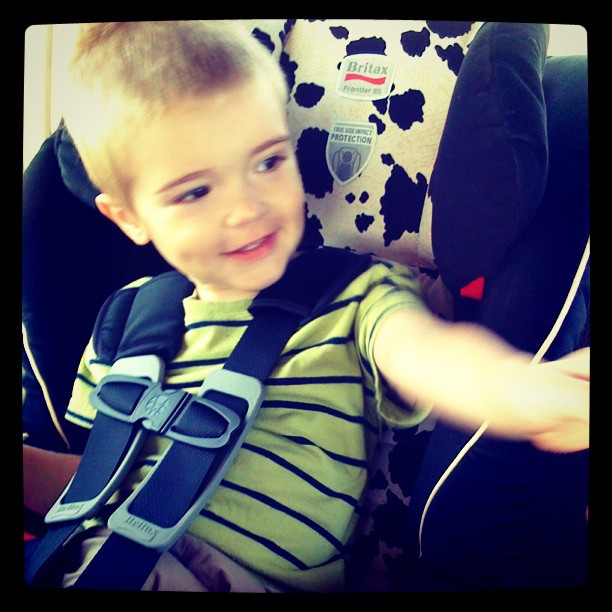
Recently I bought a bigger truck, solely for the purpose of being able to take my kids around with me when I'm doing work on our ranch. I love it when I get to take them. Sure, my productivity takes a dive, but I can still get some things done, and I love having my favorite people (my family) with me at my favorite place (our ranch). Several weeks ago, I had my three-year old son with me on one of these days and on our way out of town driving toward the ranch we had to stop at a tire shop and get a flat fixed. They got it done for us, and then I was buckling him back into his car seat, and we had a short conversation that I hope I never forget:

Me: "I sure love having you with me, bud." Him: "I love having you with me, too, Daddy. I wouldn't want to go anywhere without ya." ...[He thought for a minute as I continued buckling him in]... Him: "If you were going somewhere by yourself, I'd want to catch up."

Now that will make a Daddy's day. In fact, by now that conversation was about two months ago, so I guess I can say that it didn't just make my day, but made my quarter.

A couple of weeks ago, we had a great time with a group from our church on our Three Ways to Pray retreat, where we explored praying with other people's words, praying without words, and praying with our own words. Although I grew up most accustomed to praying with my own words, in recent years I've focused more on the other two ways of praying.

Praying with other people's words through practices like Fixed-Hour Prayer has brought a shape, rhythm, and depth to my prayer which I've longed for for a long time.

Praying without words seems to be one of the most needed practices in my own spiritual life, and probably is for many of us. It's in doing so that what we so often call "a personal relationship with God" actually, for me, becomes something that can actually be described with words like relationship or friendship.

But these comments from my little boy, and the immense joy that they brought to me knowing that they came from a very sincere place in his tender little heart, have reminded me of the power of talking to God in very personal words. For a lot of people, this is a very natural and easy way to pray, but not always for me- at least not at this point in my life.

I don't know if my words to God can have anywhere close to the same effect on him that my son's can have on me, but I would guess that it's similar. It certainly isn't by accident that the writers of Scripture, and particularly Jesus, so often choose to describe our relationship to God as one between a father and his children. So, if things between God and me are that similar to things between my son and me, I need to tell him how much I like being with him.

It doesn't require many words, but I've got to use some.