Wesley's Sermon 21: Upon Our Lord's Sermon On The Mount, Discourse 1

Mount of Beatitude Capernaum 200704A view to Capernaum from the Mount of Beatitude, where Jesus may have delivered the Sermon on the Mount. Photo by gugganij on Wikimedia [This is a post on one of John Wesley's Sermons as part of the Getting to Know John series. See the other posts here.]

"Above all, with what amazing love does the Son of God here reveal his Father's will to man!"

This sermon begins Wesley's classic series on the Sermon on the Mount (Matthew chapters 5, 6, and 7). In the next thirteen sermons, he will move through the passages of this most famous teaching of Jesus. So, basically, we're about to begin a journey into the most influential sermon in history, being led by one of Christianity's most brilliant and influential leaders. It's probably worth seeing what he has to say, right?

Since this is the first sermon in this series on the Sermon, Wesley begins with an extended introduction to the Sermon on the Mount in general, before moving into the meaning of specific passages. He asks (and of course, answers) important questions about the context in which Jesus first gave the Sermon: What had happened to this point in Jesus' life? Who was this teacher? What is it that he's teaching? Whom was Jesus addressing? How does he teach?

Wesley then moves into the content of the Sermon, beginning as Jesus did, with the Beatitudes. He spends the remainder of the message examining the meaning of the first two Beatitudes: "Blessed are the poor in spirit, for theirs is the kingdom of heaven" (Matthew 5:3), and "Blessed are those who mourn, for they will be comforted" (Matthew 5:4).

Obviously, with as much as I value Wesley's theology, I think it's a worthy investment of my time to study what he says here, and part of his interpretation of the Beatitudes has already surprised me. He says that they are both a list of characteristics that are true to some degree of all God's children all the time, and that they are a progression that we go through in the Christian life (i.e., we must begin with poverty of spirit, then mourning, etc.). Until this point I've not been familiar with an interpretation of this passage that sees Jesus' Beatitudes as a process. It's interesting to see how he applies that idea to these first two, and will be interesting to see the same in the following passages.

Although that idea is new to me, the interpretation of the Beatitudes as a list of characteristics that we are to aspire to as Christians isn't new. This is the way most of us have been taught to understand this teaching of Jesus. It takes Jesus' description of the "poor in spirit" to mean those that are humble and know their sinfulness, then goes through the rest of the list describing characteristics of Jesus himself and of his true followers.

But, although I certainly want to dig into what Wesley has to say, I've come to disagree with this traditional and widespread interpretation. The reason for this is that Jesus does not say, "Blessed are the poor in spirit, because they are poor in spirit," but "Blessed are the poor in spirit, for theirs is the kingdom of heaven." In other words, Jesus does not identify poverty of spirit, mourning, or any of the other conditions as the reason that anyone is blessed. Rather, he was turning on its head his day's understanding of blessedness. His hearers had never before been told that someone spiritually poor, or in a condition that caused them to mourn, could be blessed. But, because of him and the access to his Father's kingdom that was becoming available through him, everyone in the crowd could be blessed regardless of their condition.

My view of the Beatitudes has been shaped most of all by Dallas Willard, particularly in his masterpiece of a book, The Divine Conspiracy. After working through Wesley's remaining sermons on the Sermon, I'll post a comparison summary of his interpretation and Willard's.

Options for digging in further to this sermon by Wesley:

Here is a list of all of Wesley's sermons in the series, and their corresponding passages:

A Prayer for the Sixth Sunday of Easter (Year A)

[This is one of a series of Prayers for the Christian Year. To see the other posts, click here.]

Living, Loving Father,

As Your people, whom You have given life, we bless You today. You have always been faithful to us, and so it is that today, in every corner of our world, we, Your people, offer You our highest praise.

You have been ever-faithful, breathing Your own life into us, and providing us with everything that we need. Yet we have not been kept from all difficulty; the suffering in our world is immense. Even if we are not those who have been in the fire, or right in the middle of the storm, at times we have all felt the flames, or had the sense that a river is sweeping us away while we are completely helpless. And as we pray these things, we are mindful of our brothers and sisters in our own neighborhoods, and in other parts of our country and our world whose difficulties and suffering are much greater than our own. Please comfort those who have lost everything at the hand of nature, or because of the senseless acts of others. As so many are hurting today, we realize that each and every day, many will suffer tremendously precisely because they have done right. Because they love You, as we do, many will give up everything, including their very lives, today.

All of these burdens can feel so heavy, as if we are being crushed. Yet You have promised us, and indeed we have experienced, that we never face these things alone. This is as true for the children abandoned in the streets of our world as it is for each of us today. You have not left us alone. You are not far from any of Your children. Although we come to prayer today to seek You, praying makes us aware that You have come seeking each of us.

Even in suffering, we realize that You are near. When we consider the life, death, and resurrection of Your Son, our Savior, Jesus Christ, we see One who knows suffering, who suffered tremendously once for all of us, so that we might be reconciled to You, so that we might love You and experience the joy of walking in Your commands, so that we might see You more clearly and be made clearer channels of Your grace to a desperate world.

You have heard us as we have prayed today, and we bless You. Even though so many things could be taken from us at any moment, Your steadfast love will never leave us. We see this most clearly in Jesus, who lived in You, and who invites us to live in Him as He lives in us through the Holy Spirit.

Therefore it is as Your beloved children and Jesus' beloved students that we pray again together the prayer that He taught us, saying,

Our Father in heaven, hallowed be Your name, Your kingdom come, Your will be done, on earth as in heaven.

Give us today our daily bread.

Forgive us our sins as we forgive those who sin against us.

Save us from the time of trial and deliver us from evil.

For the kingdom, the power, and the glory are Yours now and for ever. Amen

Notes:

The readings for this week, on which this prayer is based, are:

  • Acts 17:22-31: This is the sixth of eight weeks (from Easter Sunday to Pentecost Sunday) when our reading that would normally come from the Old Testament comes instead from the Book of Acts. This passage is Paul's witness to the Greeks in Athens, identifying the one whom they worshipped as the "unknown god" as the creator of the world and all that it is in it, who is not far from us, and who raised Jesus from the dead.
  • Psalm 66:8-20: A song of praise to God for his faithfulness through intense trials, and a promise to keep God's commands.
  • 1 Peter 3:13-22: This is the fifth of six consecutive readings from 1 Peter, which heavily emphasizes the life we are to live in light of Jesus’ resurrection. In this passage, Peter encourages his readers (who were likely suffering significantly) by reminding them of the blessing that is theirs since they were God's people suffering for doing God's will.
  • John 14:15-21: This is the third of four gospel readings from John during the Easter season. (Most of this year’s gospel readings come from Matthew) It is also the second of three that come from John’s account of Jesus’ last night with his disciples, after washing their feet and prior to his arrest. This week's passage follows immediately upon last week's reading, where Jesus told his disciples that he was going away and that he is the way. We read this week that Jesus assures his friends that as they keep his commands, the Holy Spirit ("Advocate/Counselor" and "Spirit of truth") will be in them, and will be the means of Christ himself being in them, after they are able to see him no longer.

(Ecumenical version of The Lord’s Prayer from The United Methodist Hymnal)


Something I Really Want, but Haven't Learned Yet

I first encountered Ruth Haley Barton's book, Sacred Rhythms, a few years ago. It's a great book (which is why I've included it on my Spiritual Formation Recommended Reading List), and is one of those few that is worth hanging on to over the years in order to read and re-read each of the chapters. As good as everything is that she covers in the book, one of the chapters immediately captivated my attention, imagination, and longing. In it she describes a practice (or, I've really come to appreciate her language of rhythms) that I've longed for all my life, even though I never knew I was longing for it until I read her book. I was already familiar with many of the other rhythms that she described, but this one seemed completely other-worldly to me, and I've deeply wanted to make it a part of my lifestyle since then. What is it that I want so badly? Sabbath.

Like most evangelical Christians my generation or younger, I didn't grow up practicing Sabbath, really had no idea that I could, or what doing so would be like. If you would have brought this up to me 15 years ago, I would have said, "Sabbath? I'm not Jewish." (This glib response completely ignores the fact that while it is true that I am not Jewish, the Jesus after whom I'm patterning my life was very Jewish and practiced the Sabbath, just as did everyone else who wrote the Scriptures which I would have told you were the ultimate authority in my Sabbath-less life.)

So if your first response to the thought of practicing Sabbath would be anything like mine was, I'd like to give you some assurance. If this post doesn't resonate with you, there's no need to panic, because I'm sure you'll still make the cut past the pearly gates without ever practicing Sabbath... but I think we should all still give it some consideration for this simple reason: it is a very rich gift from God that is very good for us. After all, it was the Teacher, Jesus, in the midst of redefining what the Sabbath was and was not, who said, "the Sabbath was made for humankind..." (Mark 2:27).

After reading more about Sabbath since that first encounter in Sacred Rhythms, it appears that many Christians (particularly in generations before mine) grew up with a culturally mandated version of the Sabbath which boiled down to meaning it was the day of the week when they couldn't do anything fun, as the focus was only on things not to do on the Sabbath. That's not very helpful, rich, nor good for us. I'm thankful that Ruth provided a very simplified but dependable framework for shaping what Sabbath could be for each of us, as she uses these three words to describe the things we should engage in on the Sabbath: rest, worship, and delight.

I'll let you read her teaching on it for yourself for further thoughts along each of those categories, but mostly for my own benefit I'd like to write out some of the things I would like to characterize my own practice of the Sabbath (together with my family, of course), as we seek to learn to experience the goodness of this gift of God to us, in no particular order:

  • I want to have one day each week when I am advertised to as little as possible. James Bryan Smith says that in an average day we receive 600 advertising messages! Even if we think we pay no attention to them, that much encouraged consumerism has to take its toll on our souls. Freeing myself from the majority of those 600 advertisements isn't easy, but it is simple: don't go places or do things that are likely to push a bunch of advertisements on me (stores, radio, TV, internet, etc., etc., etc.)
  • I want to have one day each week when my focus is intentionally on being grateful for the things I have already been given, and away from things I don't have but would like to get. I want to give thanks for always having been provided for, rather than having any concern about where the next provision will come from.
  • I love reading, but most of my reading has a feeling of accomplishment to it. I want to read on the Sabbath, but not to check any books off of my list or have any sort of "should do this" feeling to it. Instead, I'd love to just read things that are rich, simply because I'll like reading them (the first thing that comes to mind is The Chronicles of Narnia).
  • It's easy to let technology become rude and intrusive in our lives without ever noticing. I would love for my Sabbaths to be days when technology isn't given any implicit nor explicit permission to intrude. If there's some way that it can be helpful (like talking on Skype with friends or family), then great. Otherwise, I'll enjoy a day of freedom from iPhones, iPads, text messages, etc., etc., etc.
  • The days of my life when I feel the most fulfilled are the days when I have a sense of fully enjoying my family. If I'm not mentally in another place, but am able to revel in the gifts that my wife and son (and soon to be daughter) are to me, it's always a good day. I want my Sabbaths to be a weekly cultivation of enjoying each other.
  • I want to do something outside. Particularly as I've spent most of my working life inside buildings, sitting behind desks, etc., sometimes I find myself starved for being outside. On my Sabbaths, I want to see nature, because it reminds me both that God is much bigger than I am and also much more interested in every detail that makes our universe work.
  • I want to begin this day each week with a slow dinner with my family (and sometimes also with friends), when we can light candles to remind us of God's presence with us and passion for us and say things that we are grateful for, and when I can affirm to my wife and children the blessing that they are to me and ask for God's blessing upon every part of their lives.
  • I want to see the sunrise and/or the sunset. West Texas can be glorious two times every day, and I miss 99% of those times. No reason to miss them on the Sabbath.
  • Ruth puts rest first in her three categories, so I will love taking a nap.
  • I've really come to benefit from the rhythm of fixed-hour prayer (using a prayer guide to guide me at specific times of the day, such as morning, mid-day, evening, and night), and I'd love to have plenty of room to indulge in those prayers at any pace I want once per week.
  • If opportunities come up to enjoy being with friends in ways that work with things written above, I'm all for it. (i.e. Don't invite us to do something at the mall. If you have rocking chairs we can sit in... invite us. ...Okay, those two examples actually apply 7 days per week.)
  • No hurry allowed.
  • Realize that, on this day, if I'm doing nothing I'm doing what God most wants of me. What gets done before the Sabbath begins gets done, and what doesn't, doesn't. Christ's kingdom will in no way be at risk because of my 24 hours of un-productivity, and I need drastic reminders of that. You might need them too.

Any Sabbath veterans out there with suggestions? Or anyone at all with other things this makes you long for?


Disclosure of Material Connection: If you purchase resources linked to from this blog, I may receive an “affiliate commission.” I am disclosing this in accordance with the Federal Trade Commission’s 16 CFR, Part 255: “Guides Concerning the Use of Endorsements and Testimonials in Advertising.”

Regardless of whether I receive a commission, I only recommend products or services I use personally and believe will be good for my readers.

Wesley's Sermon 20: The Lord Our Righteousness

[This is a post on one of John Wesley's Sermons as part of the Getting to Know John series. See the other posts here.] John Wesley's career in ministry wasn't easy. He ended up being incredibly successful, as his followers (the early Methodists) changed the course of history in England, but he had to fight a lot of battles along the way. He was thrown out of about as many churches as I've ever been in, and mostly over problems that people had with his theological teachings.

Some of these problems were legitimate differences, but most of them were not. Being clergy within the Church of England, Wesley never thought that he taught anything different than the historic, accepted doctrines of his church. Yet many of his problems arose from his insistence on pointing out to his fellow members of the Church of England areas of those doctrines that had been forgotten or neglected. This made many of those who heard him who had power to be very uncomfortable, which spelled problems for John. We see one such situation being played out in this week's sermon.Apparently Wesley was being heavily criticized by many as denying the traditional doctrine of justification by faith, or more specifically in language we rarely use anymore, the doctrine of imputed righteousness (something that God does for us). What this means is that believers in Christ are justified before God only because of Christ's sacrifice for them and because of nothing that they can do for themselves. Wesley goes to great pains in this sermon to establish that he believes and teaches exactly this.

Yet the Methodist movement was largely successful because of his emphasis on Christ's imparted righteousness (something that God does in us, with our cooperation). Wesley must have pushed some buttons here, because he is certainly in the hot seat when he wrote this sermon to defend himself.

Much of this sermon, even more than most of Wesley's, feels like digging through some deep 17th century theological weeds, but if you've got the courage to dig, there is some really good stuff in it. The difference between imputed and imparted righteousness was also part of the subject matter of last week's sermon, one of my favorites, The Great Privilege of those that are Born of God, only in that context Wesley was distinguishing between what happens for us in our justification before God and what happens in us as we are also born of God. These are some of the distinctions he made in that sermon, and they're also helpful in getting a grasp on what this sermon is about (this is from the outline for The Great Privilege):

Justification New Birth
Relative Change Real Change
What God does for us What God does in us
Outward change from God’s enemies to God’s children Inward change from sinners to saints
Restores us to God’s favor Restores us to God’s image
Removes the guilt of sin Removes the power of sin

All of this was contained in a short but powerful section of The Great Privilege, but this sermon helps us to delve in deeper.

Another very valuable part of this sermon is Wesley's teaching on how Christians should be unified amidst our differences. He says that although we often use different expressions, we are actually pointing to the same realities about our lives with God, and yet we attack each other, compete against each other, and tear one another apart simply for a lack of trying to understand each other. Also, he repeatedly emphasizes the bankruptcy of having correct theology but still having a corrupt heart. He says that even if those in other groups are misguided, it is certain that many of them have a genuine and full trust in Christ, which matters above all.

Options for digging in deeper:

  • Download the pdf outline of the sermon
  • Read the entire sermon on an electronic read with this ePub file
  • Or read the sermon text online here

You Never Know What Someone Will Remember (so take the chance to do something good)

One evening during the two years that my wife and I were missionaries in Guatemala at New Life Children's Home, I spent a couple of hours in the room of the little boys (they were 6 - 10 years old). We played for a while (they loved putting on my shoes), and then I read to them from a Bible storybook. I'm a bit saddened that I only read to them like this during one evening out of my two years there, but it was a lot of fun and is still a good memory. I have a lot of the boys to whom I read stories that night, but it's a memory of one of them from two years after we moved back to the States that blew me away.

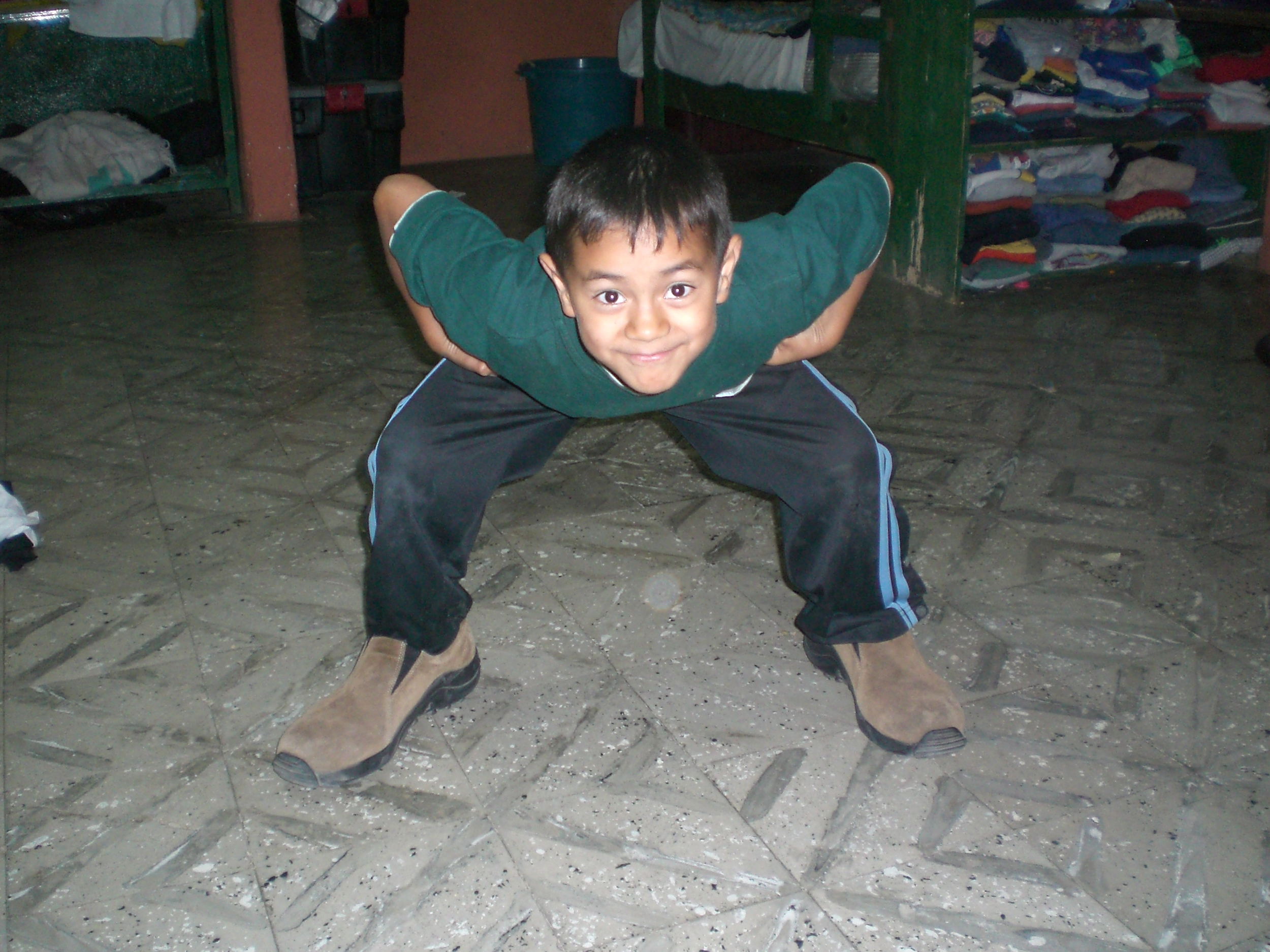
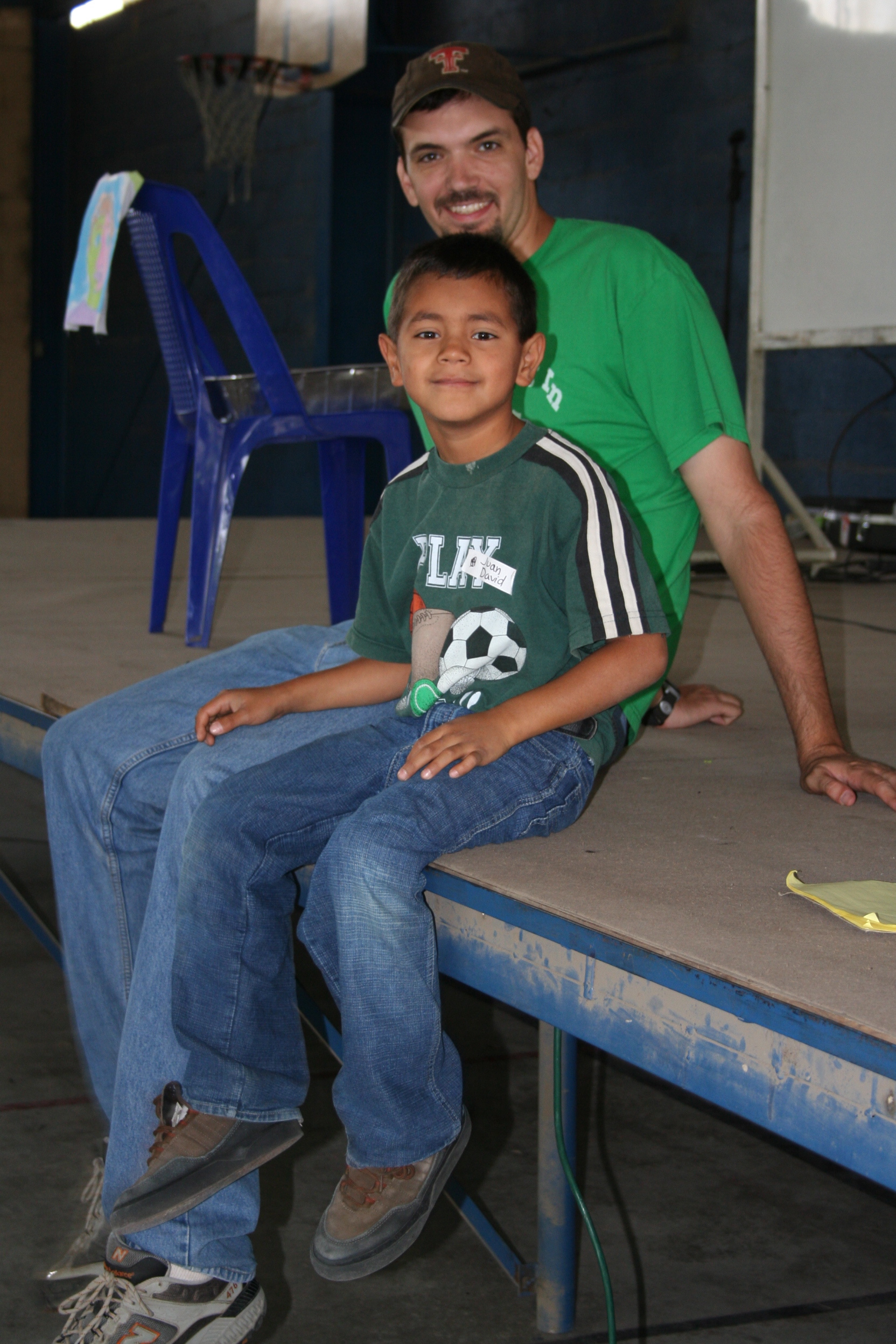
One of the little boys who lived in that room was Juan David, who was 8 at the time. (He's in my shoes in the top picture, and in the navy blue Penn St. shirt in the second picture.) Juan David was a little boy who came from a very painful past yet had a great sense of humor and was a delight to be around. He came to live at the home during the time that we were there, so we were privileged to be able to witness how the other children welcomed him and the difference that came as he realized he was in a safe place with people who loved him. I'll never forget watching him during his first Christmas, when my father-in-law took this great picture of him:

We were able to return to NLCH with a group from our church exactly two years after we moved away from there. We were very eager to see all of our friends there again, but after having been gone for two years, we weren't sure how much the younger kids like Juan David would remember us. Everyone there was very welcoming and kind to us and made us feel like we had returned home again, and we were having fun trying to restart new friendships with the younger kids.

One night during this return visit we had dinner with the little boys, and I was happy that my seat happened to be next to Juan David. While we were sitting and waiting for our food, he leaned over to me and said, "Daniel, do you remember when you came into our room and read stories with us?"

I couldn't believe that memory was still in his mind. With some of the other groups of kids, I was able to have regular times of reading with them, but with the boys in Juan David's room, I only did it once. Really happy and really surprised, I told him I definitely remembered reading stories in his room. But then he took my surprise to another level. He said, "I know where that book is!", and he got up from the table and came back with the same storybook from which I had read stories to him and his friends almost three years earlier.

I couldn't believe it! I was simultaneously filled with joy and gratitude for how that one evening had apparently been meaningful to those boys and I also felt remorse over not having spent more of my evenings reading stories to them.

I never thought that Juan David would remember that evening, but the truth is that we never know what people are going to remember about their time with us. As I reflect on the people who have made a difference in my life, I remember some small things that only happened once in my time with them as much as I remember big things, or things we did often.

This experience with Juan David really challenges me, because I know that I will have chances today to do something small for people to show them they're loved- people close to me as well as people I barely know, possibly things that I'll remember but more likely ordinary things that I'll soon forget. Yet regardless of how well we know the person, and how big or small the thing we do for them might seem, you and I never know what someone else will remember.

One difficult thing about our relationships is that they are more capable than anything else of exposing our selfishness, and at some point today, I'll have to make a choice about what to do with my time. When that moment shows up, one of the options available to me will always be to do something somewhat selfish, and another option will always be to be more loving. I have way too many times that I've chosen the selfish thing; Juan David's challenge to us is to make a habit out of choosing to be loving.

A Prayer for the Fifth Sunday of Easter (Year A)

[This is one of my Prayers for the Christian Year. To see the other posts, click here.]

Living, Loving Father,

It is in You, O Lord, that we seek our refuge. When we pray, You incline Your ear to us, and we need today for You to rescue us, quickly. You are a strong fortress where we can run and find shelter. You are our rock, on whom we can lean completely.

You, our living rock, can also make us into living stones, and through us You are doing Your work of building Your kingdom here. Yet we know part of what this means, because You sent Your own Son, Jesus, as the cornerstone, and still He was rejected and cast aside. So be it for us also if it is to be the same as we follow Him along His way out of darkness into marvelous light. We will choose to go His way, for we know that although He was rejected by people, He was chosen and precious in Your sight, O God, and Your is the approval we long for most of all.

So, Father, just as Jesus did, and later his servant Stephen, into Your hands we entrust our spirits. In Your mercy, receive us, so that by Your grace we may learn to be merciful to others, even if they seek to take our lives. Our times are in Your hands, O God. So as we live, help us to live for You, and when we die, may we be able to see Your face and walk even more fully in Your light.

We know that You chose Jesus, for He revealed You to us perfectly. In his life, death, and resurrection among us, He was as You are. Father, we ask that You would  make us like Him, that You would dwell in us and do Your work, and that our lives would bring You glory just as His has done.

We pray all of these things in the name of Your beloved Son, and it is as His followers that we pray today the prayer that He taught us, saying,

Our Father in heaven, hallowed be Your name, Your kingdom come, Your will be done, on earth as in heaven.

Give us today our daily bread.

Forgive us our sins as we forgive those who sin against us.

Save us from the time of trial and deliver us from evil.

For the kingdom, the power, and the glory are Yours now and for ever. Amen.

Notes:

The readings for this week, on which this prayer is based, are:

  • Acts 7:55-60: This is the fifth of eight weeks (from Easter Sunday to Pentecost Sunday) when our reading that would normally come from the Old Testament comes instead from the Book of Acts. This passage follows Stephen's speech, in which he summarized God's saving acts in history. When these acts reached their culmination in sending Jesus as the Messiah, those listening to Stephen picked up rocks and stoned him to death, and Stephen became the first Christian martyr.
  • Psalm 31:1-5,15-16: David identifies God as his strong fortress and rock of refuge, and pleas for deliverance from his enemies.
  • 1 Peter 2:2-10: This is the fourth of six consecutive readings from 1 Peter, which heavily emphasizes the life we are to live in light of Jesus' resurrection. In this passage, Peter uses a play on words on his own name, which means stone or rock, and says that as Christ was God's chosen cornerstone, so too are his followers to be made into living stones to be useful in God's work.
  • John 14:1-14: This is the second of four gospel readings from John during the Easter season. (Most of this year's gospel readings come from Matthew) It is also the first of three that come from John's account of Jesus' last night with his disciples, after washing their feet and prior to his arrest. In part of this passage, Jesus assures them that they do not need to be afraid, although he is about to leave them, because they know the way to the place where he will be going. Confused by this, one of them asked, "We don't know where you're going, so how can we know the way?" to which Jesus gave his famous reply, "I am the way, the truth and the life..."

(Ecumenical version of The Lord's Prayer from The United Methodist Hymnal)

Prayers for the Christian Year

I have benefited greatly for several years from reading the Scriptures according to the Revised Common Lectionary, which is a three-year schedule of passages to be used in worship based on the seasons of the Christian year. I've also found it a very helpful exercise to try not only to read these passages repeatedly during their respective weeks, but then to also write a prayer in my own words based on the readings. I will share the prayer that I write during the week leading up to the Sunday when the Scripture passages will be read by all of the churches around the world who follow this schedule of readings. If you're a pastor, or someone else who leads your congregation in prayer on Sundays, please feel free to adapt and use these prayers however it may be helpful.

Since one of the readings is almost always a Psalm, and the Psalms have been the most widely-used tool in prayer for an innumerable group of people seeking God throughout the centuries (including Jesus and his first disciples!), I try to begin my prayer with the way that the particular week's Psalm addresses God. Then, there are often connections between the other readings which I try to pray in a way that will allow them to sink more deeply into my mind.

Because I've also found great value in praying The Lord's Prayer together in worship, as well as repeatedly on my own during the week, I always try to follow my own words in prayer with the words that Jesus himself taught us when he said, "When you pray, pray like this, 'Our Father in heaven..."

Prayers posted so far:

Year A

Year B