
Mocked for My Lack of Rhythm

When I played basketball at a very small college, once per year we would go and play a big, NCAA Division I school. The scores in those games usually weren't very pretty, as we were one of the small schools that those big schools would schedule as a "cupcake" game. Aside from the beatings we took, another memory stands out about when we played our DI game my first year: it was my introduction to hecklers. We were playing against Tennessee St., which isn't exactly the cream of the crop of college basketball, but whose team was still several levels above us. They had a pretty big arena, but hardly anyone was there for the game–except for a few guys who probably sat on the front row at every home game and made it their sport to heckle the visiting team. They were good, too. As our team was getting throttled (as I recall, they had nine straight trips down the floor when they hit a three-pointer on us), at least we had something to enjoy from the evening by appreciating the way their hecklers were making fun of us. They made fun of everything about us. They mocked our uniforms, called our coach "Physics Professor" the entire game, and would come up with different things to say to each of us. I wasn't an important enough player on our team to warrant many comments from them, but I still–16 years later–remember laughing at their only comment to me: "Hey #42...I can just look at you and tell you ain't got no rhythm."

I haven't thought about that night in quite a while, but it came to mind today as I thinking about something that happened a few days ago in my year-long experiment: I got a warning sign that I'm losing my rhythm. By this point in the experiment (now five months in), I've experienced how good the rhythms of praying that I've undertaken can be. They provide a method for constantly returning to God, and I'm realizing more and more how desperately I need that.

But there have also been bumps in the road of the experiment. I've had a good number of times when I've completely forgotten to pray. It's most often happened during the evening, and I usually don't realize it until I'm reading night prayers with my wife before going to bed. I avoided forgetting any times for a while in the beginning, but ever since the first time happened and my original streak ended, it's become more frequent.

So, forgetting one of the times for prayer certainly wasn't a first for me. But, for the first time, a few days ago I went to pray night prayers and realized I hadn't prayed at midday or evening that day, nor had I even thought anything about it. I've missed times here and there, but this was the first time that I'd missed two in a row. That caused me to think a bit about how I've gone, from planning my day around praying in these ways in the beginning of this experiment, to now being about halfway through the year and going from morning until night without praying and not even noticing that I hadn't done so. I think the answer has to do with what those hecklers told me: my lack of rhythm.When I began the experiment, I had a rhythm in the evenings of reading my prayers after I put my daughter to bed. But then, somewhere a few months into the experiment my wife and I made a good change and began alternating which one of us would be with our daughter at bedtime and which would be with our son. The rhythm changed, and so did my practices. I still remember to pray on the nights when I'm with my daughter, but–though I certainly enjoy the evenings when I'm with my son, I haven't adjusted my habits accordingly.

People who have practiced these things a lot longer than I have often talk about the importance of having a certain place and time for praying, so that it becomes a habit to be in that place at that time, and when we are–we don't even have to try to remember, but we'll just pray naturally out of custom. When we do something like that every day (or most days) it becomes a rhythm for us.

That's good to pay attention to, and it's also good to pay attention to the flip side of it. When there is some change to our daily routines, we shouldn't be surprised if our spiritual habits also get a bit out of rhythm. When we moved from the U.S. to Guatemala, I was seriously out of rhythm for a while, but after a while I settled into better habits than I had known previously. When we moved back to the U.S. a couple of years later, I was again out of seriously rhythm for a while, but–again–the habits came out stronger after some time. Major changes like that throw wrenches into the works of any good rhythms we may have established. The big changes in our lifestyles usually have big impact, and it may take a while for our habits to resurface in a new way after the changes have settled. I've been aware of that dynamic for a while, but this experiment is helping me to realize that it also comes into play with the smaller changes, like the adjustment in our routine of putting our kids to bed.

Whether the changes are big or small, and our resulting out-of-rhythm-ness is major or minor, I think it's safe to say we can go easy on ourselves. Yes, we want the habits to resurface, but the fact that you may feel like you've lost them in a period of change doesn't mean you no longer love Jesus very much–it probably just means you're out of rhythm for a while. Be merciful to yourself–with intention, they'll come back after some time, hopefully even in better ways than you knew them before.

The good part of this is that every time those changes to our lifestyles come, we have an opportunity to reshape our habits in new ways that are more conducive to the kind of lives we want to live and the kind of people we want to become.

–––

Something I've prayed this week:

O God, you have prepared for those who love you such good things as surpass our understanding: Pour into our hearts such love towards you, that we, loving you in all things and above all things, may obtain your promises, which exceed all that we can desire; through Jesus Christ our Lord, who lives and reigns with you and the Holy Spirit, one God, for ever and ever. Amen. (Prayer for the Sixth Sunday of Easter from The Book of Common Prayer)

[This is the 28th post from A Year of Living Prayerfully]
My Preschoolers' Interpretation of a 16th Century Saint

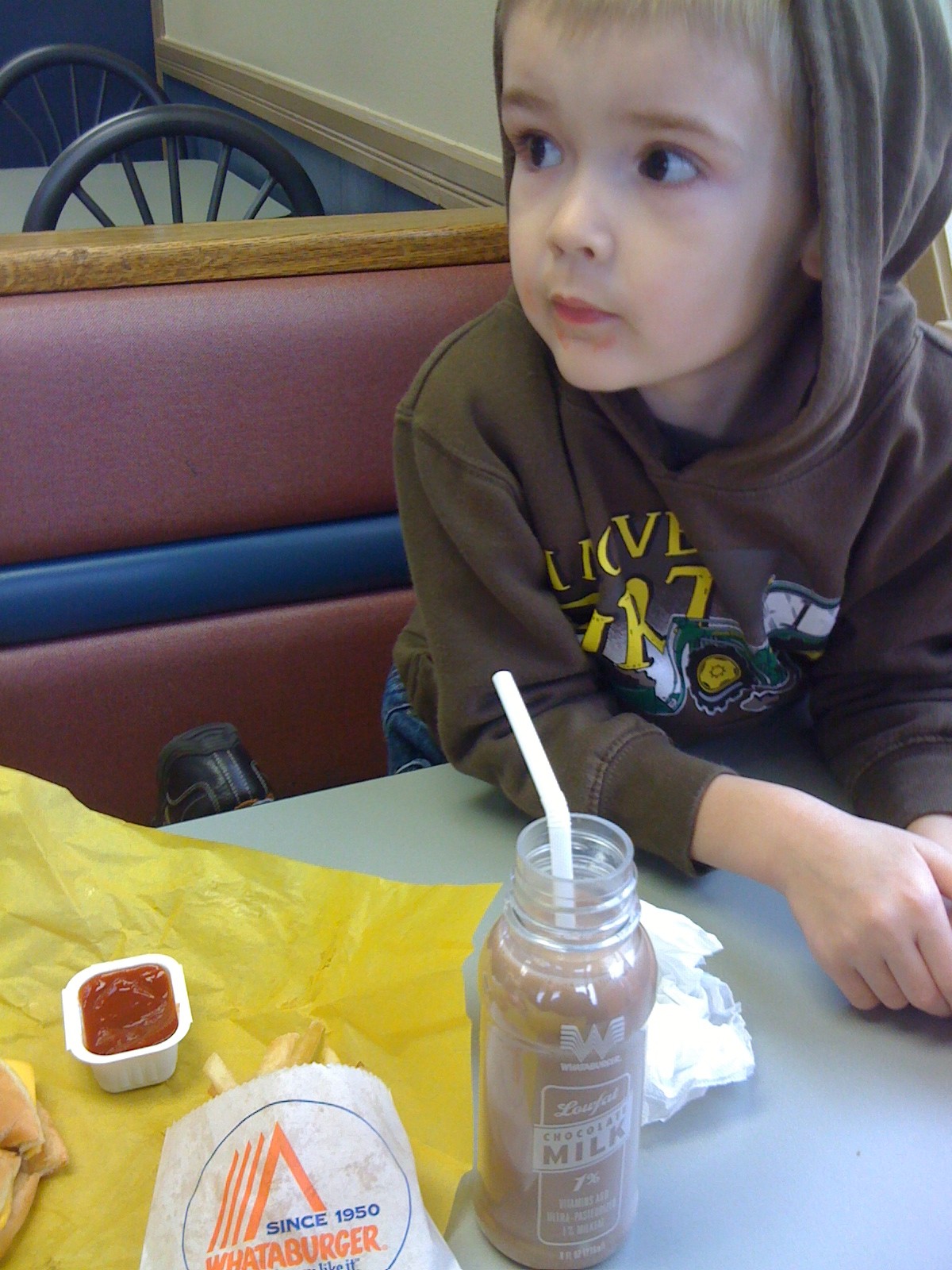
photo-9 Last week, I was driving home from the ranch with my kids in the back seat of my pickup truck. We were about halfway home when I heard my 22-month-old daughter in the back seat begin to say with gusto, "Uhh! Uhh! Uhh!" I looked back to see what she was talking about and saw her pointing out the window at our favorite place to get a burger (Whataburger, of course).

Me: "Do you see Whataburger?" Her: "Yes!" [Pause] Her: "Eat! Eat! Eat! Eat! Eat!"

The mention of Whataburger got my 4-year-old son's attention. The boy sincerely loves that place. Earlier this year, while on a trip to visit my wife's family in Missouri (where, regrettably, there are no Whataburgers), we were eating cereal at breakfast, and we had this conversation:

Him: "Hey Dad, how much longer til we get back to Texas?" Me: "It's still going to be a while. Our trip just started. How come?" Him: "It's just–I'm really missing Whataburger." Me [smiling]: "Me too, buddy. But it will still be there when we get back to Texas." Him [frowning]: "I just don't think I can wait that long."

So, back to the conversation after my daughter's, "Eat! Eat! Eat!..." When he heard her saying that, my son looked up from the toys he'd been playing with and realized with a sad resignation that–once again–we were driving so close to his favorite establishment, but instead of stopping we were continuing on right past it on our way home. Then came the memorable question/commentary:

Him: "Dad, why are we spending all of our time not eating at Whataburger?" Me: "Good question, buddy."

He had a good point. He's now been in this world four and a half years, and though (obviously) we're no strangers to Whataburger, he could see that he was letting his life go by, spending virtually all of his time on other things. Why, Daddy, why?

For a long time, I lived my life essentially asking the adult equivalent of my son's question. I had things that were pretty deeply-seated desires in me, but still I spent all of my time not doing them. For example, for years, I thought it would be great to spend a day alone with God–even to make a habit of doing so. I even attended conferences where I chose workshops that talked about doing it, and always left inspired. Yet I still never did it.

It applied to other desires too. I wanted to spend more time with my family. I wanted to spend more time outdoors and less time in an office. I wanted to spend more time in boots and less time in dress shoes. Perhaps most of all, I wanted to live more prayerfully than I was.

You probably have desires like those too, and my son's question about Whataburger applies just as well. Why are we spending all of our time not doing them?

St. Teresa of Ávila wrote about this in the 1500s:

If we have the hope of enjoying this blessing [communion with God] while we are still in this life, what are we doing about it and why are we waiting? What sufficient reason is there for delaying even a short time instead of seeking the Lord...? (From Interior Castle)

It was both a great relief and a scary challenge to me when I realized that the huge majority of the obstacles that were keeping me from living according to those desires were not nearly as external as I'd thought. When it came down to it, my lack of those things was not due to anyone else's fault, but simply to the fact that I had never really intended to arrange all of the parts of my life around them (and, perhaps that desperation hadn't yet driven me to make any drastic changes). It didn't take any nerve to keep living like I always had and continue wishing that things were different.

A huge step for me was my participation in a Transforming Community. I felt like it gave me permission to live the way I'd always wanted, but in the process I discovered that I had never actually needed anyone's permission in the first place. All I needed was God's invitation and some reliable guidance along the way. The invitation had already been given to me, just as it has to you, and good guidance is readily available to us.

(This is where the analogy breaks down, because in this stage of their lives, my kids certainly do need my permission to go to Whataburger.)

–––

Something I've prayed this week:

Almighty God, whom truly to know is everlasting life: Grant us so perfectly to know your Son Jesus Christ to be the way, the truth, and the life, that we may steadfastly follow his steps in the way that leads to eternal life; through Jesus Christ your Son our Lord, who lives and reigns with you, in the unity of the Holy Spirit, one God, for ever and ever. Amen. (Prayer for the Fifth Sunday of Easter from The Book of Common Prayer)

[This is the 27th post from A Year of Living Prayerfully]

The Most Abused Poor Widow in History

As I spent a lot of time in Mark's gospel last year, and then in Luke this year, I've noticed a story which both of them tell, and both of them tell it in a way which makes it obvious that the meaning they were trying to attach to the story is very different from what I had always thought it meant.

It isn't an obscure story, but one that is likely to be familiar to many of you. Here is Mark's version (and Luke's is very close to it):

Jesus sat down opposite the place where the offerings were put and watched the crowd putting their money into the temple treasury. Many rich people threw in large amounts. But a poor widow came and put in two very small copper coins, worth only a few cents.

Calling his disciples to him, Jesus said, “Truly I tell you, this poor widow has put more into the treasury than all the others. They all gave out of their wealth; but she, out of her poverty, put in everything—all she had to live on.” (Mark 12:41-44, NIV)

If we read this story by itself, we are likely to come away with the same conclusion that I had always had in the past: Jesus was praising the widow for her sacrificial generosity, giving "all that she had to live on" for the sake of God's temple. But, if we want to avoid committing biblical malpractice, we can't just read the story by itself. Instead, when we read it as part of the overall stories that Mark and Luke were telling, it takes on a very different meaning.

To help point us toward the meaning Mark and Luke intended in telling the account of this poor widow, here are the three things I noticed which first made me wonder if all of the things I'd ever thought about this story might have been off-center:

First, despite the sermons that we've all possibly heard (or some of us may have even preached!) which praise the woman for her sacrificial generosity, Jesus never commended her. He simply sat there watching, noticing what was happening, and pointing it out to his disciples. Neither story says that he ever spoke to the woman. He never even said what she did was good. He simply commented that her few cents cost her everything.

Second, the more I've dug into the gospels, the more I've realized that their authors didn't choose the words they used–nor tell the story in the way they did–by accident. Mark has particularly intrigued me with his story telling ability, as at times he will put stories next to each other, apparently so that their meanings bounce off of one another, each filling in gaps in the other.

In light of that, we should pay a lot of attention to the stories that are put next to the account of this poor widow, and Mark and Luke each use the same accounts to precede and follow this one.

Here is the passage immediately before Jesus' comment about the widow's offering:

As he taught, Jesus said, “Watch out for the teachers of the law. They like to walk around in flowing robes and be greeted with respect in the marketplaces, and have the most important seats in the synagogues and the places of honor at banquets. They devour widows’ houses and for a show make lengthy prayers. These men will be punished most severely.” (Mark 12:38-40, emphasis added)

So Jesus warned his disciples to watch out for people like this who, among other things, devour widows' houses, then a poor widow came and put in "all she had to live on" in order to support the system that supported the people Jesus was warning his disciples against.

Third, we've got to pay attention to the stage of Jesus' life in which this occurs, during the final week before his crucifixion. He had very recently ridden into Jerusalem to the cheering crowds who welcomed him as their new king. Only the Jewish king or a high priest would have the kind of authority to go into the temple and make all of its regular business come to a halt, which is exactly what Jesus did after arriving in the city. Then, he spent the next couple of days teaching in the temple, mostly about the destruction that was sure to come to it and to Jerusalem if its people failed to change their ways and heed his warnings. Jesus was saying and doing extremely provocative things against the temple and its leadership, and the authorities would not allow someone who said and did those kinds of things–especially right there in the temple!–to live.

Putting the widow's offering in that context, notice the verses that come next:

As Jesus was leaving the temple, one of his disciples said to him, “Look, Teacher! What massive stones! What magnificent buildings!”

“Do you see all these great buildings?” replied Jesus. “Not one stone here will be left on another; every one will be thrown down.” (Mark 13:1-2, NIV)

So, if we put these three passages together (in the context of intense war of words at the temple between Jesus and the religious authorities), both Mark and Luke give us this sequence of events:

  • Jesus continued teaching in the temple, and warned his disciples to watch out for these teachers of the law, because "...they devour widows' houses..."
  • Then he pointed out a poor widow putting the last money she had to live on as an offering into the temple treasury.
  • Then, as they were leaving the temple and one of his disciples remarked how impressive the temple was, Jesus said that it was going to be demolished.

So, to make my point (or, actually to rescue Mark's and Luke's point): Instead of holding the poor widow up as an example for the rest of us to follow, Jesus pointed her out as someone who was being unjustly abused by a crooked religious system that refused to heed his warnings and was about to come crashing down. She gave all she had to live on, presumably because she had been taught it was her duty to God to give those offerings, and she gave them to support a religious system which–instead of devouring her house–was supposed to have existed for the inseparable purposes of worshipping God and caring for people exactly like her.

In Memory of Brennan Manning

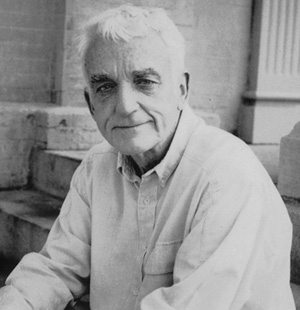
Brennan Manning As a youngster, I didn't like to read. At times, I would find some book I thought I would like, but I virtually never made it through any books that weren't full of pictures of my sports heroes. That changed, and it altered the direction of the rest of my life, when I read Brennan Manning's The Signature of Jesus. I was at a point in my life when I was beginning to become tired of living superficially, and I needed guidance on how to connect with God in genuine ways. Going through the pages of that book was a new experience for me, in which I discovered how effective good books can be at pointing me forward in the kind of life I want to live with God.

I have read (and sometimes re-read) probably a dozen others of his books in the years since. He was as effective as anyone at communicating the grace of God and how wondrous of a thing it is that God so endlessly loves people who are so thoroughly messed up. (It can be difficult to find, but his short parable, The Boy Who Cried Abba is worth abundantly more than the cost of the book and the time it takes to read it.)

Brennan's honest words were deeply needed. He knew both the darkness of sin and the incomparability of God's grace. I'm grateful for his life and for his courage to share words which have drawn me and so many others further into "the relentless love of Jesus."

The First Thing John Ortberg Hates About Spiritual Formation

Leadership Journal recently published an article by John Ortberg called, "Seven Things I Hate About Spiritual Formation." It's fantastic. I count Ortberg among my heroes, and largely because of people like him, I too fit his self-description as someone who now spends a lot of time writing and thinking about spiritual formation. It is the field that I studied for a master's degree, and even if I only count the books that specifically claim to be about spiritual formation–if I were to put the ones I've hung on to over the years because they're the best next to each other on a shelf–I've got at least three feet of them. And my number one frustration with Spiritual Formation would be the same thing Ortberg lists first:

1. I hate how spiritual formation gets positioned as an optional pursuit for a small special interest group within the church. People think of it as an esoteric activity reserved for introverted Thomas-Merton-reading contemplatives. I hate that. Spiritual formation is for everyone. Just as there is an "outer you" that is being formed and shaped all the time, like it or not, by accident or on purpose, so there is an "inner you." You have a spirit. And it's constantly being shaped and tugged at: by what you hear and watch and say and read and think and experience. Everyone is being spiritually formed all the time. Whether they want to or not. Whether they're Christian or not. The question isn't if someone will sign up for spiritual formation; it's just who and what our spirits will be formed by.

In other words, spiritual formation isn't a series of retreats for those who are "into that sort of thing." It isn't one elective, among many, that a church can offer. (If your church has a spiritual formation pastor...what in the world are the other people on staff doing?) Ortberg's simple description nailed it: everyone has an "inner you," and it is being shaped into some kind of thing or another all of the time. By virtue of being humans, this is unavoidable, so we'll be wise if we pay attention to that process.

The questions of spiritual formation, then, are about what kinds of things help that process to go well and what kinds of things impede it. The issue is never if we "like" spiritual formation, because everyone–whether or not they ever read anything by John Ortberg, Dallas Willard, or any of the other authors in those three feet of books on my shelf–is inevitably getting a spiritual formation just from the experiences that come with being alive. The only issue that matters is whether that formation is a good one or a bad one. What kind of character do you and I have now because of our spiritual formation to this point? And considering the trajectory of our spiritual formation up until today, what can we realistically expect that our character be like when it's all said and done?

A few of the books in those three feet of the best of the best on my shelf are by Robert Mulholland, and he addresses the same issue:

Spiritual formation is not an option. Spiritual formation is not a discipline just for 'dedicated disciples.' It is not a pursuit only for the pious. Spiritual formation is not an activity for the deeply committed alone. It is not a spiritual frill for those with the time and inclination. Spiritual formation is the primal reality of human existence. Every event of life is an experience of spiritual formation. Every action taken, every response made, every dynamic of relationship, every thought held, every emotion allowed: These are the miniscule arenas where, bit by bit, infinitesimal piece by infinitesimal piece, we are shaped into some kind of being. We are being shaped either toward the wholeness of the image of Christ or toward a horribly destructive caricature of that image. This is why Paul urges Christians, 'Whatever you do, in word or deed, do everything in the name of the Lord Jesus, giving thanks to God the Father through him' (Col. 3:17, NRSV; italics added). The Christian spiritual journey is a life lived in, through, and for God.

Human life is, by its very nature, spiritual formation. The question is not whether to undertake spiritual formation. The question is what kind of spiritual formation are we already engaged in? Are we being increasingly conformed to the brokenness and disintegration of the world, or are we being increasingly conformed to the wholeness and integration of the image of Christ? (From Shaped by the Word)

In my own biased opinion, I think that all seems obvious enough. But if it's true, why does church after church after church tend to view spiritual formation exactly the way Ortberg described: "an optional pursuit for a small special interest group within the church"? Even for churches that pay attention to spiritual formation, why do they look at it as if it is one thing among many that they might choose to do, rather than acknowledging that everything they do forms people's spirits in some direction–and therefore paying more attention to the destination (kind of character) to which that direction predictably points?

Spiritual formation should be to churches what science is to research universities. It is what we do, and we do it in a wide variety of contexts. Churches should be the leading centers of the world for this field, where people would naturally turn when considering questions like, "How do I become a truly good person? How do I live a truly good life?"

It's easy to go on a rant like this and ask why other people get it wrong so often. But then the answer to the questions in the above two paragraphs is significantly more difficult to swallow than those ranting sentences were to type. The answer (similar to #7 in Ortberg's list) always hits way too close to home. If what we're saying about spiritual formation is true, and those around us aren't valuing spiritual formation highly enough, a primary factor has to be that it hasn't been lived and taught well enough by those of us who do.

Daily Options and a New Schedule

A couple of changes to what you'll see here, based on two things I've learned from my most recent writing project: First, as I'm writing this, I've got about two and a half years in which this blog has been my favorite hobby, even if a very inconsistent one. Going back even farther, I had a previous blog which had a life of about four years before beginning this one, so apparently my track record of writing online without any predictable rhythm is now into its seventh year.

(Seeing that I've been blogging that long and have now built an email list of about seventy subscribers means my blog grows at about a rate of one reader per month. I'm quite happy with it being among the slowest-growing blogs in America. That means you're much more valuable to me than you would be to those silly famous people.)

But the intention is finally pretty settled in me to change that. Among the things that writing the 40 Days of Prayer posts taught me was that, to my own surprise, I really enjoyed writing according to a more disciplined schedule. I've overdone it for brief stretches in the past, trying to post something every day, which I can't keep up for long and still do other important things like bathe regularly. And–much more often–I've underdone it and not posted anything for long periods of time. So (I think) I've found a rhythm I can settle into while utilizing some of the things I learned while writing the Lent messages and work on a schedule of posting something new three times per week.

Second, based on the very kind feedback that a good number of folks gave me about the Lent messages, I realized that it isn't just the regularity of writing that matters, but also the regularity of reading. So, hopefully the three times per week schedule will be helpful in that regard, but for the handful of you who might want to also read something on the in-between days when nothing new has been posted, I've decided to start linking to some of the things I've written before which I think are still worth saying. (This experiment will be considered a success if anyone chooses it, and it will be a raving success if anyone who isn't a blood relative opts in.)

So, if you're interested in a daily option (except for Saturday mornings–I'll be taking a sabbath, and I'll let my internet monkeys take one too), choose one of these:

  • Email: If you choose the email subscription option "Every Single Day (Except Saturdays)", on the days new things are posted, you'll receive them by email like normal. On the in-between days, you'll receive a link to something that's already out there.
  • Facebook: If you Like the blog's page on Facebook, the same links will be posted there–new things on new thing days, and old things on in-between days.
  • Twitter: Same idea, different way to get the links by following me on Twitter (@deharris). I post other things on Twitter as well, usually related to the kind of stuff I write about here-particularly links to good stuff I read by others online or on a Kindle.