
Day 2: Lent's Invitation

As I discussed yesterday, for years I had no idea what Lent really was. Even after I learned that Lent has been an important part of our habits in the church for centuries, I still had very little understanding of why we do things the way we do. As has often been the case for me, I was pleasantly surprised to find something very helpful right within this Methodist tradition of which I've been a part my entire life. The following "Invitation to the observance of Lenten Discipline" [perhaps could use a more exciting title, but] is part of our liturgy for Ash Wednesday and gives a helpful explanation of what Lent is and an invitation to participate:

Dear brothers and sisters in Christ:

the early Christians observed with great devotion the days of our Lord's passion and resurrection, and it became the custom of the Church that before the Easter celebration there should be a forty-day season of spiritual preparation.

During this season converts to the faith were prepared for Holy Baptism. It was also a time when persons who had committed serious sins and had separated themselves from the community of faith were reconciled by penitence and forgiveness, and restored to participation in the life of the Church. In this way the whole congregation was reminded of the mercy and forgiveness proclaimed in the gospel of Jesus Christ and the need we all have to renew our faith.

I invite you, therefore, in the name of the Church, to observe a holy Lent: by self-examination and repentance; by prayer, fasting, and self-denial; and by reading and meditating upon God's Holy Word... (From The United Methodist Book of Worship)

I hope that, if you sense any kind of invitation for the kind of Lent described above to characterize your days between now and Easter, that you can take a moment now in prayer and dedicate these weeks of your life to God and his work of grace in you.

A Prayer for the Day:

Heavenly Father, in you we live and move and have our being: We humbly pray you so to guide and govern us by your Holy Spirit, that in all the cares and occupations of our life we may not forget you, but may remember that we are ever walking in your sight; through Jesus Christ our Lord. Amen.*

A Prayer for the Week:

Almighty God, whose blessed Son was led by the Spirit to be tempted by Satan; Come quickly to help us who are assaulted by many temptations; and, as you know the weaknesses of each of us, let each one find you mighty to save; through Jesus Christ your Son our Lord, who lives and reigns with you and the Holy Spirit, one God, now and for ever. Amen.*

Click here for this week's Scripture readings.

*From The Book of Common Prayer

[This is part of 40 Days of Prayer: Daily Emails for Lent]
Day 1: It's Lent, Not Lint

I remember a time as a teenager when my youth pastor liked to joke about things he had given up for Lent. For example, if someone suggested that he wash his car or mow his lawn, his response would be, "I can't. I gave it up for Lent." I laughed every time I heard him make one of those jokes, even though it turned out that I really didn't get his punch line. Since I had no idea what the church season of Lent was, I thought that he was saying he had given up things for "lint." Like many things kids that age find humorous, I now realize that wouldn't have made any sense, but still my middle-school brain thought it was funny. I imagined my youth pastor sitting at home with his precious collection of lint rolled into a large ball, with his dirty car and tall weeds in the yard.

Thankfully, the church's season of Lent is something much more meaningful than that. Lent is about finding ways to return to God with our whole hearts. The things we do today, Ash Wednesday, are designed to give us concrete ways of beginning again our return to God. We pray; we read Scripture, including David's prayer of repentance from Psalm 51; we allow our pastors to place ashes in the sign of a cross on our foreheads to remind us that our lives in this age are fleeting, to mark us as the people of the crucified Messiah, and to remember that we are utterly dependent on the life that God gives us as a gift both today and forever. We invite God to search us and help us to see our sin, while trusting that he is full of compassion and mercy, and then we consider the ways that we can best arrange these lives he has given us around the invitation to come and adore him.

A Prayer for the Day:

O God, maker of every thing and judge of all that you have made, from the dust of the earth you have formed us and from the dust of death you would raise us up. By the redemptive power of the cross, create in us clean hearts and put within us a new spirit, that we may repent of our sins and lead lives worthy of your calling; through Jesus Christ our Lord. Amen. (From The United Methodist Hymnal)

Click here for today's scripture readings.

[This is part of 40 Days of Prayer: Daily Emails for Lent]
I've Had Daily Mini-Lents and Didn't Even Know it

If I were to begin this blog post with the words, "Four score and seven years ago," most of you would realize that I'm probably not making a statement about something that happened 87 years ago. It would be more likely that by using that phrase, I would be trying to say something about Abraham Lincoln, or freedom, or the dignity of all people, or all of the above. If I would choose to use a phrase like that, it would be to point you back to something about the meaning of the Gettysburg Address, in which it was originally said.

On the other hand, if you had zoomed in from another culture and had no way of connecting my use of that phrase with its context, you'd likely have a hard time getting the full meaning of what I would be trying to say. If you really wanted to dig in, you'd probably get a dictionary out to look up the meaning of "score", then make the calculation, then you could do a lot of research on what someone like me might have been trying to say about the year 1926. And you would have completely missed my point.

This happens way too often in reading the scriptures. Particularly when we read the New Testament, it's so packed full of allusions and quotations of things from the Old Testament–which point us back to something about the meaning of the original passage–that we're like the person who has zoomed in from another culture and we don't have the culturally ingrained knowledge required to make the connections that the author intended. Even if we are serious students, we might get out all of our tools, dissect the words, make some misinformed calculations and completely miss the point. (If you're not convinced of this, try reading the book of Revelation. Then take a look in a bookstore or online at how many different ways intelligent people have tried to interpret it.)

I've started to become much more aware of this in the past couple of years as my own reading of scripture has been rejuvenated by capable teachers who help me to see the connections that I miss otherwise (especially N.T. Wrights fantastic series of For Everyone commentaries), since when I read these things written by ancient Jews, I'm unquestionably looking in on a culture very different from my own.

This week, I've been glad to discover the same kind of dimensions at play when I pray with other people's words. As part of my experiment this year, I've noticed two lines that come up every single morning in the words that I am given to pray: "Lord, open our lips. And our mouth shall declare your praise."

At first, being that person zooming in from another culture, I didn't recognize these as being from scripture. Then one day I was reading in a passage and noticed them, but still couldn't have remembered their context or what the fuller meaning was that they might have been put in these prayers to point me toward.

Then I read the scripture readings for tomorrow, Ash Wednesday, and it clicked. Tomorrow is the beginning of Lent, and one of the traditional readings for Ash Wednesday is Psalm 51. This psalm is David's prayer of confession to God after the prophet Nathan confronted him about his adultery with Bathsheba. It's a very rich prayer, and very fitting words for us to pray each year when we begin the season of returning to God with all our hearts.

Thus, even though I certainly haven't realized what I've been doing, every morning during the two and a half months since I began this experiment, I've been pointed back to David's powerful, gut-wrenching, prayer of confession. Every morning, through praying those words, I've been offered the chance to think back to their fuller context (including "Have mercy on me, O God, according to your unfailing love, according to your great compassion, blot out my transgressions...Create in me a pure heart, O God, and renew a steadfast spirit within me...") and to have a mini-Lent, a daily returning of my heart to God as I begin again each and every morning.

–––

Something I've prayed today:

Almighty and everlasting God, you hate nothing you have made and forgive the sins of all who are penitent: Create and make in us new and contrite hearts, that we, worthily lamenting our sins and acknowledging our wretchedness, may obtain of you, the God of all mercy, perfect remission and forgiveness; through Jesus Christ our Lord, who lives and reigns with you and the Holy Spirit, one God, for ever and ever. Amen. (A Prayer for Ash Wednesday from The Book of Common Prayer)

[This is the 21st post from A Year of Living Prayerfully]

Why Multitasking Stinks

"No wonder we have the attention span of a ferret on a triple cappucino." – James Bryan Smith I've come to a conclusion about what might be one of the most helpful things to do in my efforts to live prayerfully this year: renounce multitasking. Much of what I hope to gain from this year's experiment is an increased ability to pay attention to God and to those around me, and there may be no other socially encouraged practice that works against this as much as trying to accomplish multiple things at once.

Perhaps some people are more wired to be multitaskers than others, and I'm just not one with the wiring for it, but I think there's another level to it. In Live Prayerfully, I talk about how the point of times we have specifically set aside for prayer isn't what happens to us during those times, but how they help us to be prayerful in all of the other parts of our lives. The point of this post is what happens in the other direction: how the way we live during the rest of our lives impacts what we do when we attempt to give our attention to prayer.

It seems like we're blinded to it, but there's a pretty obvious connection between the ways that we intentionally let our attention flit from one thing to another during 90%+ of our waking hours and then find it very difficult to stay focused when we try to give God our attention in five minutes of prayer. The more advanced our technological gadgets become, the higher the number of constant potential distractions and interruptions we always have with us. (Remember in the old days–six or seven years ago– when you actually had to go sit at a computer to check email?)

How prayerful might my life be, if during the +/- 23 hours of the day that I'm doing something other than spending time set aside for prayer, I was committed to only doing one thing at a time? My hunch is that during that 24th hour of the day, my mind, spirit, and body would be able to settle down more easily and give my attention go God–then I would also be able to give better attention to others during the course of a normal day.

So, some ideas for training myself to do one thing at a time for the purpose of increasing my ability to pay attention to God and others:

  • Even while I've been writing this, I changed from my normal on-computer working routine (which almost always includes having at least five programs open simultaneously) to having nothing on my screen except writing this. My computer is very able to do multiple things at once, but perhaps it's not good for me to see more than one of them.
  • I wonder if it's possible for me to regress to those email practices of six or seven years ago and go back to only working on email when at my desk. Of course it's convenient to be able to check and send messages from my phone, but I'd guess that 90% of the times I check email on my phone, I'm not looking for any message in particular–and the ones that come in are almost never things that can't wait. I'm also usually with other people who are more worthy of my attention than those messages that grab my attention. Checking email on my phone is apparently more of a physically ingrained habit than it is a useful activity.
  • One of the quickest ways for me to lose patience with my kids is for me to try to accomplish anything while they're with me and want my attention. Sure, there are times when something has to be done at that moment, but most of the time I have a choice and could easily put my task away (usually something on my phone or computer) and give my attention to my kids instead.

Other ideas?

–––

Something I've prayed this week:

O God, who before the passion of your only-begotten Son revealed his glory upon the holy mountain: Grant to us that we, beholding by faith the light of his countenance, may be strengthened to bear our cross, and be changed into his likeness from glory to glory; through Jesus Christ our Lord, who lives and reigns with you and the Holy Spirit, one God, for ever and ever. Amen. (Prayer for Transfiguration Sunday from The Book of Common Prayer)

[This is the 20th post from A Year of Living Prayerfully]

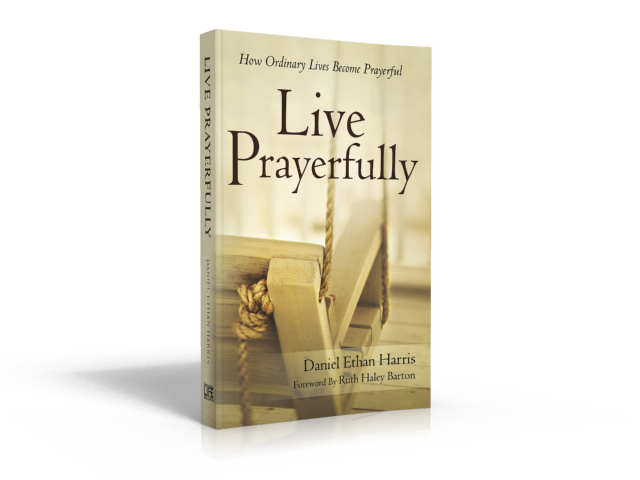
Live Prayerfully's Kindle Edition is Up

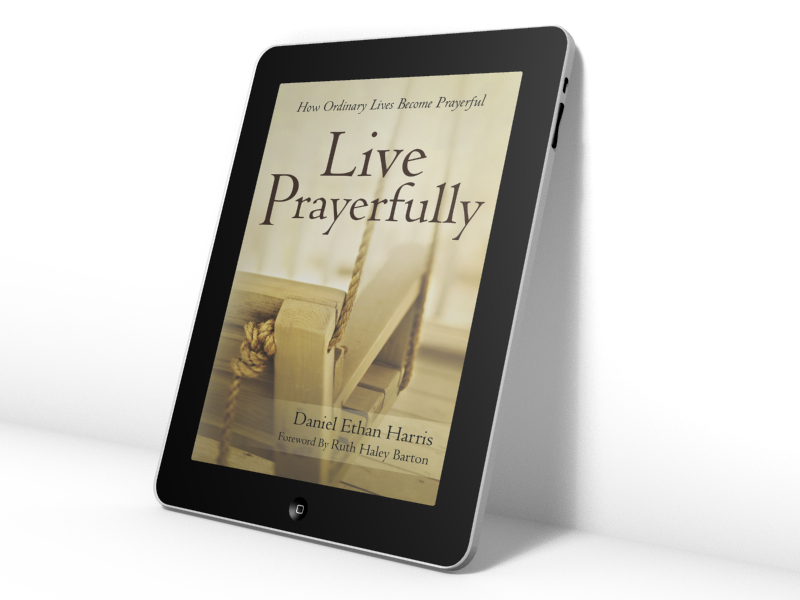
iPad Live PrayerfullyI'm thrilled that one of the versions of Live Prayerfully is now publicly available, as the Kindle Edition posted on Amazon this morning. One big advantage of the electronic editions: Part Two of the book consists of guides for prayer for each day of the week, and I really hope that some folks will find using an electronic version very handy for making use of those guides on a regular basis. Since Kindle books can be read on so many different devices, it helps turn the book's guides for prayer into pocket guides that you can always have with you. (Other e-book versions are also in the works in case anyone has a strong preference for another reader, such as the Nook. The printed edition should be available within a week.)


How to Be as Prayerful as You'd Like to Be

I've recently been reading a book on health. It's got lots of good information on nutrition, exercise, and overall health. No one around me would be able to guess that I'm reading it, though, because I have changed absolutely nothing about my health habits while reading it. I'm still eating the way I always have been and continue trying to convince myself that activities like typing on a keyboard or riding around in a pickup truck have a small amount of exercise built into them. The bottom line is that I've been reading this good health information, thinking that the things I read are good ideas and that it would be nice if I ever get around to living that way, but I've been reading them without any intention of doing what they say.

A conversation with Robert last week got me thinking about this in connection with this year's experiment. We were talking about one of our heroes, Dallas Willard, and how he teaches the reliable pattern for change in any area of our lives as VIM: First we need to have the vision of how good such a change would be, then an intention to make the necessary arrangements in our lives to make them conducive to the change, and then we find the most helpful means for allowing the change to happen. The example Dallas often uses is of learning a foreign language. If we can clearly see the benefit of learning a language, we will likely become determined to do so, and then do the things necessary to learn it.

So, for most of my life, I've wanted to be prayerful. Some parts of my life have certainly been more prayerful than others–particularly in the seasons when I discovered the good guidance from others which Live Prayerfully is written to pass along. But also for much of my life, I wanted to be more prayerful than I was. In a vague, subconscious way, I continually looked forward to sometime off in the future when I might become the kind of prayerful person that I'd thought all along it would be nice to be.

I've studied enough of the lives of God's friends through history (including knowing a good number of people who fit that category) that I had a pretty good vision of what the prayerful life might be like. And since I've been able to learn from some very good folks along the way, I've also had great guidance in how to go about different practices of prayer. I had the vision. I had the means. But one piece of Dallas' pattern was missing and kept me from living the kind of prayerful life I had wanted for a long time: I never intended to do so. There was always something else I intended to do with the days right in front of me than to become prayerful.

Honestly, in taking on this experiment for this year, my thinking about it went only so deep as that it would give me things to write about on this blog. But the occasion of making that commitment seems to have been a stumbling, bumbling step over the line of finally letting my intentions genuinely match the vision and means of the prayerful life that had already been given to me by others. I'm extraordinarily blessed to have had others in my life to help put those in place, but the solid, gut-level, established intention was the piece only I could take care of.

(PS: By opening with the example of diet and exercise, I certainly don't want to imply that I'm okay with ignoring my physical life and happy with doing so because I think my spiritual life is in good shape. There are multiple levels on which that would be foolish, including thinking that I have a "physical life" and a "spiritual life." I, like you, just have a life, and it's my responsibility to cooperate with God's grace in each area of it. But something I've observed over the years is that, regardless of how dramatic someone's conversion to God may or may not be, we all learn one lesson at a time and cooperate with his work in one part of our lives before doing so in another. In other words, hopefully the intention is coming about nutrition and exercise one of these days. But–dear God–I hope I don't make a commitment to blog about that for a whole year.)

–––

Something I've prayed this week:

Almighty and everlasting God, you govern all things both in heaven and on earth: Mercifully hear the supplications of your people, and in our time grant us your peace; through Jesus Christ our Lord, who lives and reigns with you and the Holy Spirit, one God, for ever and ever. Amen. (Prayer for the Fourth Sunday after the Epiphany from The Book of Common Prayer)

[This is the 19th post from A Year of Living Prayerfully]