The Look on My Face

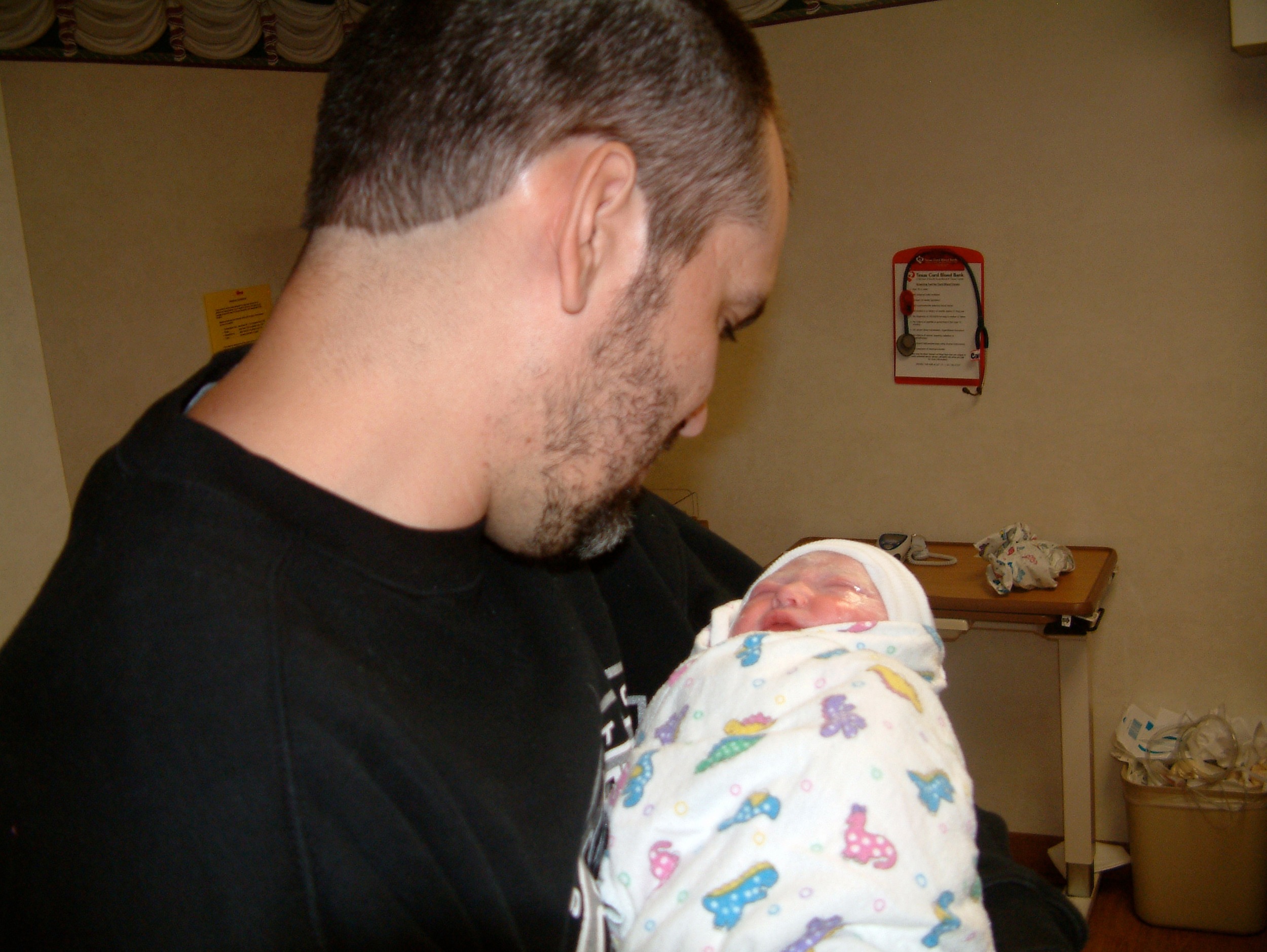
I can literally still feel the look on my face from these two moments, even though each of them were years ago: CIMG11282 - Delivery 19
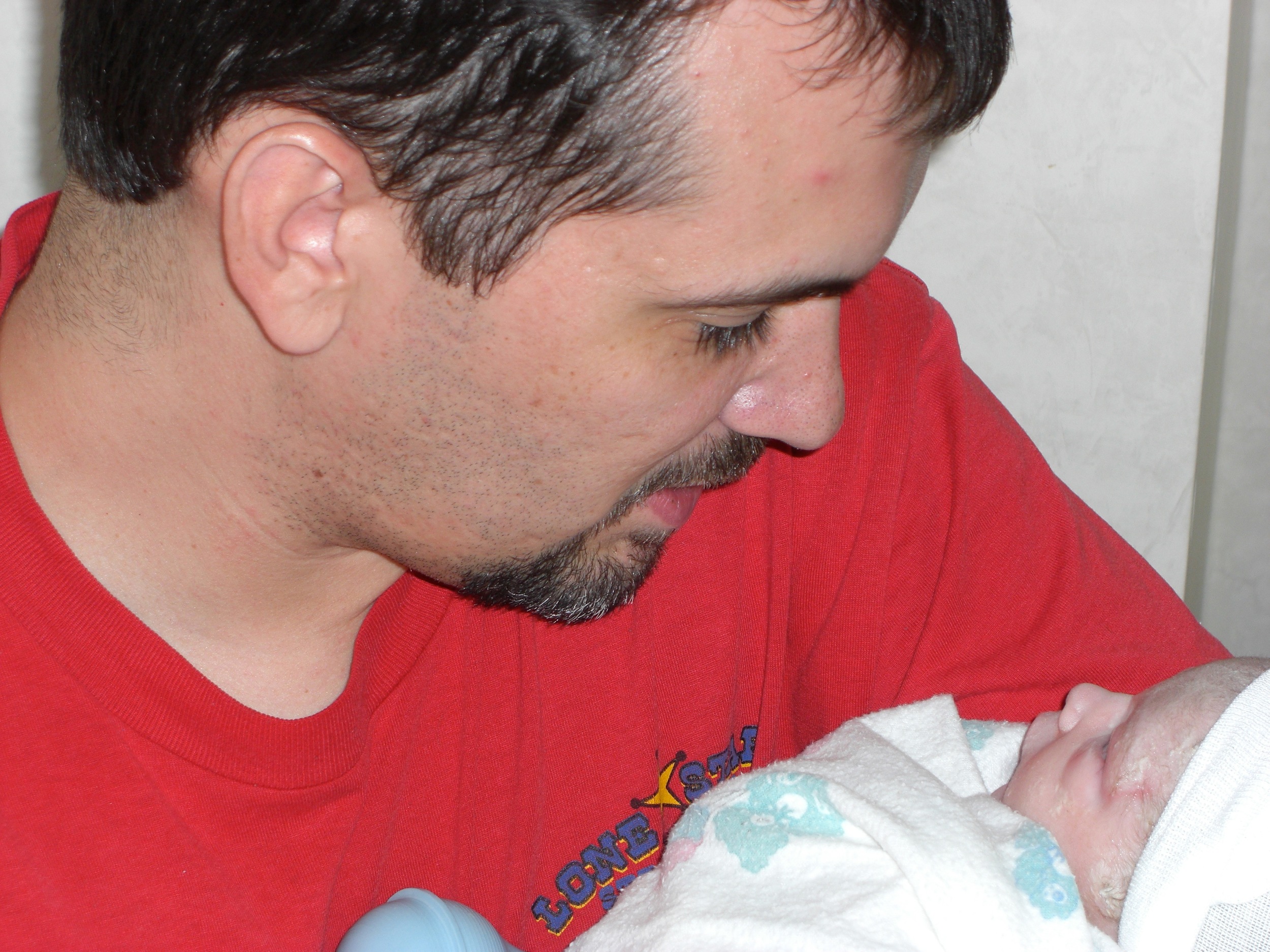
The top picture is of the first time I held our son, our firstborn. The bottom picture is of the first time I held our daughter. I can still feel the smile on my face holding her for the first time. Her birth was a real celebration for us. Everything went pretty smoothly with her, and we were ready for her. We had three years of practice at parenthood under our belts, a bedroom in our house ready for her to live in, and it was all smiles when she came.

Holding my son for the first time was no less joyous, but it was very different, and the look on my face with him was less about big smiles and more about trying not to completely lose it. Things didn’t go as smoothly with him, and so the fact that he was there, alive, healthy... I can’t put it into words.

And there were other factors that went into the expression on my face at that moment. We weren’t nearly as ready for him, having just moved back to the U.S. when my wife was eight months pregnant. When he came, we didn't yet have our own place to live, or even clothes that would fit a newborn.

The emotions behind my facial expression when I held him that first time went back farther than that. Before moving back from Guatemala, my wife spent more than a month on bed rest during her pregnancy, and there were times we doubted whether we would ever see him. Back farther: we found out she was expecting when she was in an ER with pneumonia, so he had a rough start from the beginning.

And back even farther: We had been married for six years before my wife became pregnant. We waited a long time, and we were more excited than we ever had been before when we found out she was expecting. But neither of us ever held that baby as the pregnancy ended early in a miscarriage, and our hopes that had built over the years and went through the roof when she was expecting came crashing down with one visit to her doctor when all of the sudden there was no heartbeat. We were crushed, and the waiting continued.

All of that and more went into the look on my face when I held my son for the first time. I had waited- painfully waited- for that boy... until finally the day came, and I held him in my arms. The expression on my face when I did so was full of a lot of waiting, a lot of hope, and a lot of joy.

 —

As I look back to those moments when I first held my kids, and how I can still feel the expressions that were on my face with each of them, I've wondered what Simeon's face looked like when he held in his arms the baby boy of a peasant couple from Nazareth. The eyes that stared at that baby boy had seen plenty of suffering during Simeon's long lifetime. Simeon is described as "waiting for the consolation of Israel," and he had waited through a lot. His lifetime in Jerusalem likely included Israel's suffering under the brutal rules of the Hasmoneans, then the Romans, then through them, Herod.

And back even farther: Simeon's people had been desperate for God to intervene and make things right ever since they were carried off to Babylon as captives around 600 years before the day that Simeon held that baby boy in his arms. We don't know a lot about Simeon, but from the way that Luke tells his story, we can tell that he soaked in the writings of the book of the Hebrew prophet Isaiah from around the time of that exile. The few words that we have recorded from Simeon drip with Isaiah 40-55's prophecies which spoke of God’s return to Israel, and Israel’s return to God. They told of the suffering servant who would take God’s people’s punishment upon himself and bring about their healing. They spoke of God’s promise coming to fulfillment of blessing all the nations of the world through Israel.

So when I wonder what the expression on Simeon’s face was at that moment, I think about how deeply Simeon had soaked Isaiah's message into his soul, and then added his own lifetime of waiting on to the centuries of waiting that had preceded him. At that moment, when he saw that baby- the baby who by some means God had told him was to be the King of Israel, the King of the world, his knowledge of those Scriptures bubbled up and poured out, combined with his faith that they would be fulfilled, and his joy that right there- in that baby whom he held and at whom he surely stared... it was all reaching its climax, it was all coming to pass, it was all going to happen. In that peasant baby boy.

Simeon had waited- painfully waited- for that boy... until finally the day came, and he held the long-expected Messiah in his arms. The expression on his face when he did so surely showed a lot of waiting, a lot of hope, and a lot of joy, as well as a lot of pain, since the Isaiah prophecies he knew so well also spoke of the suffering that surely awaited the child.

All of that has helped me to understand more of why this prayer of Simeon, which he spoke when he held the infant Jesus in his arms, is included every day in the prayers that I am reading throughout this year when I pray with other people's words:

Lord, you now have set your servant free to go in peace as you have promised. For these eyes of mine have seen the Savior, whom you have prepared for the world to see: a Light to enlighten the nations, and the glory of your people Israel.

I want to live like Simeon. I want to wait on God, and wait on God, and wait on God, and soak in the Scriptures, and listen, and I want to do so for the entirety of the rest of my life until I too can go in peace just as God had promised Simeon.

(Read Simeon's story in Luke 2:22-35.)

Something I've prayed this week:

Almighty God, you have poured upon us the new light of your incarnate Word: Grant that this light, enkindled in our hearts, may shine forth in our lives; through Jesus Christ our Lord, who lives and reigns with you, in the unity of the Holy Spirit, one God, now and for ever. Amen. (A Prayer for the First Sunday after Christmas Day from The Book of Common Prayer)

[This is 12th post from A Year of Living Prayerfully.]

My Bad Christmas Prayer Idea

Any year-long experiment is bound not to go smoothly through its entirety. At least I hope that's true, since this one was sailing along until my wife said these words to me on Christmas night: I don't want to be married to a monk, I want to be married to you!...Your experiment is getting on my nerves.

And I admit, she said that for good reason. It turns out that having my prayer book open on the table next to me and trying to discretely turn pages while my family was digging into their stockings on Christmas morning in order to squeeze my morning prayer in was a bad idea. Really bad. It might go down with some of my worst.

I quickly realized it was a bad idea when she gave me a look after she saw me doing it, not because she gave me a look, but because I knew it was missing the point. Much of the reason I'm doing this experiment is because of my conviction that praying in these ways will help me be more attentive to God and to those around me- especially my family- in every kind of moment in our lives. Yet there I was on Christmas morning flipping pages rather than paying full attention to my family. (I knew it had been a really bad idea that night when she admitted she's fantasized about ways to go about hiding my prayer book from me. If things ever get to that point, this experiment will come to a crashing end.)

Family is where the rubber meets the road in this project for me. I hope to be doing this ultimately for the benefit of others- hoping that these are means of planting me more firmly in God's kingdom, and that it will therefore make my existence in this world more beneficial for others-  most of all these others who live under this roof with me. If I come to the end of this year and my wife isn't glad that I've done this experiment (or before then, if I ever have to go out and buy another copy of my prayer book because she's followed through on her fantasy and hidden my current one), if it doesn't help me become a better, more loving and attentive husband and father, this experiment of testing my own advice to its farthest reasonable limits will clearly not have been successful. (But in the book's defense, nowhere in Live Prayerfully do I offer advice that comes anywhere close to flipping through a prayer book while your family is opening Christmas presents. That isn't even included in the "farthest reasonable limits" of what I recommend. That's just an example of the centuries-old practice of engaging in something "spiritual" while completely missing the point of why we do so.)

So, thankfully, my wife was very gracious to me in my foolishness. And, thankfully, it gave me a humiliating story to post about myself as part of this project. But I hope that whatever I post at the end of this year will be very different- both in my family's feelings about it and in my discretion in how to go about trying to pray in these ways throughout this year.

[This is 11th post from A Year of Living Prayerfully.]

Something I prayed on Christmas Day (after the stockings, at a more appropriate time, while my wife wasn't looking):

O God, you make us glad by the yearly festival of the birth of your only Son Jesus Christ: Grant that we, who joyfully receive him as our Redeemer, may with sure confidence behold him when he comes to be our Judge; who lives and reigns with you and the Holy Spirit, one God, now and for ever. Amen (A prayer for Christmas Day from The Book of Common Prayer)

Advent and Waiting Without Words

Something I've prayed this week:

Our King and Savior now draws near: Come, let us adore him.

Advent is drawing to a close and Christmas is four days away. It seems like every year once Christmas comes and then is gone, I have some sense that, yet again, I missed it. Sure, each year I enjoy the time with family whom I love and the different things we get to be a part of, different celebrations and opportunities to so good for others. Yet still, I am well acquainted with the post-Christmas Day sense of having thrown a party for someone and not paid much real attention to them while we were both there. Years ago, I occasionally played around with writing songs and one line that stuck in my mind from a song I never finished was, "Sorry I missed you at the party I threw for you last week." Christmas has often been like that for me, and my guess is, for many of us.

Taking on this experiment this year, though, has helped me to linger more attentively in these weeks that the church has traditionally called Advent, and my hope is that when the big day comes next week, I will be able to notice a difference and have a sense of having been more attentive to the one for whom most of the world throws this party each year. I like the way that the prayer for this last Sunday of Advent says it:

Purify our conscience, Almighty God, by your daily visitation, that your Son Jesus Christ, at his coming, may find in us a mansion prepared for himself...

That would surely be quite a different experience from my normal, less attentive Christmases, both from my perspective and God's.

As the rhythms which this experiment have imposed on me this Advent season have had time to sink in, I've noticed a meaningful connection between Advent and the practice of praying without words. Advent is about waiting- about remembering Israel's long, desperate waiting for the coming of the Messiah; about them waiting for God's address to and deliverance of them as the prophets had seemingly disappeared and the oppressors continued to succeed one another; about Zechariah and Elizabeth's waiting childless for so many years- then after Gabriel's promise, waiting for the birth of their son, John; and about Mary's waiting after another promise for the birth of her son, Jesus. Apparently, through these two boys, Israel's centuries of waiting would be brought to completion.

Advent is also about our waiting- about our waiting for the day when Jesus' royal coming will finally take place and the prayer he taught that so many have uttered for so long ("may your kingdom come and your will be done on earth as it is in heaven") would finally and fully be fulfilled. It's about our waiting for God to make things right in the midst of a world full of the strange mix of compassion and beauty with pain and school shootings. We wait for the day when King Jesus will reappear, all of our little kingdoms will submit in full loving devotion to his, and everything will be made new, with sin and death's defeat being completed forever.

And maybe there's no better way to practice the waiting that Advent is about than by praying without words. We wait on our minds and hearts to settle down and trust in God, for God to address us whenever and however he sees fit, and for God's slow work of transforming us into the likeness of Jesus to be brought to its completion.

[This is 10th post from A Year of Living Prayerfully.]

Forgetting God and Learning How to Avoid it

Something I've prayed this week:

Purify our conscience, Almighty God, by your daily visitation, that your Son Jesus Christ, at his coming, may find in us a mansion prepared for himself; who lives and reigns with you, in the unity of the Holy Spirit, one God, now and for ever. Amen. (Prayer for the Fourth Sunday of Advent from The Book of Common Prayer)

Yesterday I was supposed to deliver a check for my wife. When I was pushing our kids in the swing before supper (yes, less fortunate ones in other places, it was 75 degrees here in Mid-December), I reached in my pocket and found the check I had forgotten about. I told her, and it didn't surprise her for one obvious reason: I forget stuff. A lot.

As I've embarked on this project of living prayerfully throughout this year (part of which involves using guides for prayer), I've been surprised to notice how often forgetting comes up in these prayers that I'm following. Just in the last couple of weeks, the prayers have included:

"We humbly pray you so to guide and govern us by your Holy Spirit, that in all the cares and occupations of our life we may not forget you..."

"... yet I do not forget your law..."

"...grant that we may never forget that our common life depends upon each other's toil..."

It's humbling to the extreme to pause and think about how often I forget God. I guess that takes some definition, because not forgetting God certainly has to mean something other than to have every thought of every moment be, "GOD GOD GOD GOD GOD."

Perhaps the best description I know of what it means to not forget God is in part of another prayer to which I've been taken often in this experiment:

...And, we pray, give us such an awareness of your mercies, that with truly thankful hearts we may show forth your praise, not only with our lips, but in our lives, by giving up our selves to your service, and by walking before you in holiness and righteousness all our days...

Reflecting on how well I live that is not only humbling to the extreme, but even makes my eyes feel a bit watery. Using the language of the prayer, God's mercies to me are immense and never-ending. My awareness of them, gratitude for them, and the resulting kind of life that I live falls far short of what I would like for it to be.

But I don't say that to beat myself up about it. Rather, I just don't want to forget. I want to learn to forget God less and less and live ever more aware of his mercies toward me and toward all of us.

In the beginning of this project, I was a bit apprehensive about what it would be like to keep up with these commitments of praying four times per day, and including three kinds of prayer each day. In my fourth week of doing so, it's the greatest anti-forgetting practice I've ever tried.

[This is the 9th post from A Year of Living Prayerfully.]

Prayers for Newtown

I heard of the shooting in Newtown, Connecticut as I was driving. I had no words. I turned around and looked in the back seat at my two preschoolers and I grieved for those families who would not be able to do so again. Silence is an appropriate prayerful response, and it's needed now. There are no words that can fit just right. Perhaps praying without words in response to these shootings is the best way for us to mourn with those who are mourning, to give our attention to the God who promises to comfort the broken hearted and eventually set everything right, and to increase our awareness of what's going on in our world and in our own souls.

Silence is good and needed, but when I heard the news I wanted some words, though it has taken me a few days to find them. So below are two other prayers. The first is in someone else's words, the second in my own.

I dug several places trying to find a prayer with roots, which also seemed suitable to what I longed to pray but had no words. I found some good things, including this from The United Methodist Book of Worship:

Everliving God, in Christ's resurrection you turned the disciples' despair into triumph, their sorrow into joy. Give us faith to believe that every good that seems to be overcome by evil, and every love that seems to be buried in death, shall rise again to life eternal; through Jesus Christ, who lives and reigns with you for ever more. Amen.

And one in my own words:

Living, loving Father,

In this season, as we remember Jesus' coming and look forward to his reappearing, as we are reminded of the promise of Immanuel, God with us, with heavy hearts we give you thanks that you are with all of us at all times. You are with us now as we pray this prayer. You are with every family that is grieving such a tragic loss. You were with those whose lives were lost, you are with them now, lovingly caring for them, and you will be with them forever.

God, we cannot understand this. We pray that your kingdom would come and your will would be done on earth as in heaven, so that all senseless suffering in the world may end and that you would finally fully be our King, reigning in relentless peace and goodwill. Come to us again, and set things right.

Until that day when Christ reappears, make our hearts like yours. Help us to defend those who have no defenders. Give us the eyes to identify evil and injustice in the world around us and the courage to confront it. Move us with your kind of compassion so that we may do good to everyone in every way.

Even in the face of tragedy, may the seeds of hope that spring from Jesus' resurrection continue to grow in us along with the joy and peace which we both celebrate and long for this time of year.

Amen.

[This is the 8th post from A Year of Living Prayerfully.]

Checking My Hypocrisy

Something I've prayed this week:

Lord Jesus, stay with us, for evening is at hand and the day is past... (From The Book of Common Prayer)

I can be a ridiculously private person. This can irritate my wife quite a bit, and for good reason, because it often unintentionally leads to me neglecting to share significant things with her. With her, it's unintentional, as I just get wrapped up in things going on inside my head and some of them never make it out. But with other people, sometimes it's a bit more intentional. I'm not the easiest person in the world to get to know, and I usually have no problem with that.

But once in a while, I get surprised by how far I swing in the other direction before realizing what it is that I've done. It might be in conversation with someone when I realize I've just given information that they really would have been better off not knowing. The instances of having the feeling of having said too much are really rare for me, but they do happen, and I can't stand it when they do.

So as I'm nearing the end of the third week of this experiment, I caught myself wondering if writing about these things could turn out to be an example of when I've said more than I should have. The passage from Jesus's Sermon on the Mount came to mind as something that, in a way, I happen to be intentionally not doing throughout this year.

And when you pray, you must not be like the hypocrites. For they love to stand and pray in the synagogues and at the street corners, that they may be seen by others. Truly, I say to you, they have received their reward. But when you pray, go into your room and shut the door and pray to your Father who is in secret. And your Father who sees in secret will reward you.

(Matthew 6:5-6, ESV)

I have yet to go pray in a synagogue or on a street corner, but perhaps a blog is one of our 21st century equivalents to them. While my conscience is clear about my motivation for writing these posts, I can see the irony: I'm attempting to do what the Bible says by finding ways to pray without ceasing. Then I come really close to doing something the Bible forbids by writing about those attempts here in a public way.

Though if someone really wanted to lay the charges from the passage above against me in this project, I've concluded that I'm on pretty safe ground for a couple of reasons:

First, Jesus wasn't giving laws for us to follow in this passage. There are plenty of times that I pray other places than my room, or without the door closed, and I'm sure that God is fine with it. In the same way, one can easily think of ways to pray as a hypocrite that have nothing to do with being in a synagogue or on a street corner. Rather than laying down laws, he was pointing to our motivation. Do we pray for our Father, or so that people can see us, congratulate us, and think of us as a prayerful person?

And there's the rub: Have I written Live Prayerfully, and am I writing these blog posts because I want people to think of me in a certain way? If that's the case, I need even more these words that I've been praying every day: Lord, have mercy! I think that Live Prayerfully is written in such a way that folks will read it and realize that while I've attempted these things for a while, I'm far from any kind of a guru. And as for this year of blog posts- I'll combat the charge of hypocrite by being sure to post something somewhat humiliating now and then. Such as this:

If you would have been watching me during my time of praying without words yesterday, you would have been doing so for a long time. I was sitting with my daughter as she laid down for her afternoon nap. During midday prayer, when I came to the opportunity to pray without words... zzzzzzzzzzzzzzzzzzzzzzzzzzzzzz. We both woke up about an hour and a half later.

Yes, I am available to teach others how to do as I do...

[This is the 7th post from A Year of Living Prayerfully.]

Kids, Santa, Jesus, and Why We Pray

CIMG8560

Something I've prayed this week:

Stir up your power, O Lord, and with great might come among us; and, because we are sorely hindered by our sins, let your bountiful grace and mercy speedily help and deliver us; through Jesus Christ our Lord, to whom, with you and the Holy Spirit, be honor and glory, now and for ever. Amen. (Prayer for the Third Sunday of Advent from The Book of Common Prayer)

Several times during the past week, I've driven past a church near our house which has a sign that says, Do your kids know Jesus like they know Santa?

Though I can't say for sure, my hunch is that the author of the sign wants parents to be able to say yes to the question, and if that hunch is right, I'm certain the words were posted with good motivations. The church wants parents to help their children know that Christmas is more about Jesus than it is about Santa.

But it got me thinking and I'd like to put the question a different way:Parents, do you know Jesus like you know Santa? I wonder how many times an honest answer would be yes, and I'm convinced a yes response to that question is common but tragic.

Unless I have been badly informed, "knowledge" of Santa is limited to things along these lines:

  • Stories and poems about him in books, videos, etc. These are inescapable. We seemingly can't go anywhere or look at anything without seeing the big fella in red. My original approach as a parent regarding him was that I'd try to ignore him and hope my kids never noticed him. It didn't work. It's more likely that they could go through life without noticing me than without noticing him.
  • Other people's claims to have seen him or interacted with him ("You serious, Clark?") I can remember leaving Christmas Eve services at church as a kid and on the ride home hearing Paul Harvey give a news report on the radio about where in the world's sky that the sleigh had been spotted. This wasn't just any voice relating this news. It was Paul Harvey. He was to be trusted at least as much as the preacher.
  • The evidence- especially the stuff he gives us Cookies disappeared. Every tiny sound after dark on the 24th was surely what hooves on the roof would sound like. And then, of course, there was the stuff he left behind- the gifts to me attributed to him. Indisputable.

So I wonder how many of us may have been badly formed and actually, we do know Jesus like we know Santa, with our "knowledge" of Jesus being limited to things along these lines:

  • Stories and poems about him in books, videos, etc. To some degree, these too are inescapable. If anyone ever bothers to wonder about the origin of terms like Good Samaritan or hypocrite, or things like why we number our years the way we do, or any of the abundance of crosses we see all around us (I saw one today on the back of a truck paired with the silhouette of a naked woman), they will trace them to ancient stories about or told by Jesus. But we only largely only know those things to the degree we choose to investigate them. Otherwise, it's more likely that we could go through December without noticing Jesus than without noticing Santa.
  • Other people's claims to have seen him or interacted with him All kinds of people claim to have had all kinds of experiences with this poor man who was born in a small village two millennia ago. Some of these people are as trustworthy as Paul Harvey. Some others of them are preachers, so one would expect them to lay claim to these kinds of things. (That isn't a knock on preachers- there was a time in our culture when they were implicitly regarded as trustworthy- it's a cultural fact that this is no longer the case.) Many others of them are the ordinary kind of people you and I interact with every day.
  • The evidence- especially the stuff he gives us Perhaps someone is able to deal with stress better than they were before being a Christian. Or, a few even have those fortunate experiences of a loved one having a medically inexplicable recovery. Others find meaning and purpose for their lives. Many find a deeply needed sense of forgiveness. All kinds of gifts come our way which get attributed to him.

But here's the point: None of the things listed above are the same as knowing a person. If it is not possible to know Jesus in a completely different way than kids know Santa, I am wasting my time in my attempts to live prayerfully this year, because in the end this isn't about blog posts, or habits, or even prayer itself- it's about following up (in a real and gut-level honest way) on the claim that so many have made throughout these last 2,000 years: We can know him.

[This is the 6th post from A Year of Living Prayerfully.]