A Prayer for the Seventeenth Sunday of Ordinary Time (Year A)

[This is one of a series of Prayers for the Christian Year. To see the other posts, click here.]

Living, Loving Father,

We give thanks to You, O Lord, and we call upon Your name today. We sing praises to You, we glory in Your holy name, and we cannot help but to speak of the wonderful things You have done. We seek You, O Lord, and Your strength. Today, as always, we seek Your presence.

You have been faithful to us, even when we have been unfaithful to You. Even if we have tried to make deals with You, perhaps deceiving ourselves and others in doing so, You have never acted as we do, returning deception for deception, but You have always only been loving and faithful to us.

Although others surely fail us, regardless of the things that happen, the good and the bad, when we look back upon them, we can see that, incredibly, You have managed to use them all for our good. Indeed, the very worst that people can to do us cannot separate us from the love that You have shown us so clearly in the life of Your Son, our Savior, Jesus.

It was He who showed us most fully what Your love is like. It was He who taught us about life in Your kingdom, and how it is easily worth any price we may have to pay. And it was He who taught us how to pray, so again today we join together as His students, praying the prayer that he taught us, saying,

Our Father in heaven, hallowed be Your name, Your kingdom come, Your will be done,  on earth as in heaven.

Give us today our daily bread.

Forgive us our sins as we forgive those who sin against us.

Save us from the time of trial and deliver us from evil.

For the kingdom, the power, and the glory are Yours now and for ever. Amen

Notes:

Depending on which system of ordering one pays attention to, this Sunday can also be referred to as Proper 12, or (in 2011) the Sixth Sunday after Pentecost. Regardless of the system, the readings are the same. So, the readings for this week, on which this prayer is based, are:

  • Genesis 29:15-28: The tenth of thirteen possible consecutive readings after Pentecost from Genesis, and the third of five on the life of Jacob. In this passage, Jacob, who has been a deceiver of his father and brother, now becomes the deceived by his father-in-law, Laban.
  • Psalm 105:1-11, 45b: A portion of this psalm, which recounts God's acts in the history of Israel, which recalls how God worked through the first families of Abraham, Isaac, and Jacob in faithfulness to his promises to them.
  • Romans 8:26-39: The ninth of sixteen possible consecutive readings after Pentecost from Romans, and the third of three consecutive readings from the great passages of Romans 8. In this passage, Paul concludes a major section of his argument and description of the Christian way with the strong declaration that "neither death, nor life, nor angels, nor rulers, nor things present, nor things to come, nor powers, nor height, nor depth, nor anything else in all creation, will be able to separate us from the love of God in Christ Jesus our Lord."
  • Matthew 13:31-33, 44-52: All of the gospel readings after Pentecost in Year A come from Matthew, and this is the third of three consecutive readings of Jesus’ parables in Matthew 13. This passage actually includes five short parables about the kingdom of heaven: "The kingdom of heaven is like a mustard seed, ...yeast, ...treasure hidden in a field, ...a merchant in search of fine pearls, ...a net that was thrown into the sea."


 

A Parable of What We're Doing Here

Situation One:

Imagine that you are going on a tour of an automobile manufacturing plant. On this particular day, employees from all levels of the company are there, and you have a chance to visit with several of them. Some of them work on the manufacturing lines, others are managers, some are in marketing, and you even have a chance to visit with a board member and the CEO.

In making conversation with the first couple of workers, both of whom work on the manufacturing lines, you happen to ask the same question to each of them. It catches your attention that their answers were very different from one another. If the question had been something like, "What is your name?" you might expect different answers, but not for the question that you asked them: "So, what is it you that you make here?"

The first person described something like this:

But, strangely, the second person described something more like this:

You were sure that both of those things couldn't be manufactured in this one plant, so, being intrigued, you decide to ask the question of every worker you could talk with. To your amazement, you received a huge variety of answers from people at every level of the company. You asked nine more people the same question, and each one described something still different:

Situation Two:

On another tour of a similar plant, you had similar conversations and asked the same question. This time, everyone gave the same answer, describing the same product. What was incredible to you, though, was that the product everyone claimed to be making was this:

while the product that you actually saw coming off the assembly line was this:

Situation Three:

On yet another similar tour, again with similar conversations and the same question, you noticed that everyone gave the same answer, and this time the product they claimed to be making was the same as was coming off the assembly lines:

What puzzled you this time, though, was that you were at a plant whose building and signs said that it made fire engines, so they should have been making this:

Application:

Most churches today have some kind of mission statement, which is a good thing. And many of those mission statements, including that of my entire denomination, will have something like this in them: "To make disciples of Jesus Christ." This is also a very good thing.

Situation One: Problems arise, however, when we don't know what a disciple is, and are very unclear on what it would actually be like to live as one. Regardless of what the mission statements say, if leaders themselves aren't even clear on this, teaching others the meaning of and way into discipleship is certainly impossible. The result is that no unified idea of what we're doing here exists, so everyone has their own ideas. If anything identifiable actually ends up being produced, it's mostly by accident.

Situation Two: Thankfully, increasing numbers of church leaders are too learned and capable in organizational leadership to let such confusion exist, and are very effective at communicating the church's purpose to everyone involved. Many times, though, in the desire for Jesus' gospel to be mass-produced it is first reduced, resulting in a product that is far below what was promised. Instead of "life to the full" that Jesus described, we end up with "things will be really good after you die."

Situation Three: Because of the difficulty of Situation Two, it is easy to come to the conclusion that the original mission handed down to us wasn't realistic; therefore it isn't what Jesus really wants us to be doing, and we should redefine the project altogether. Because of how we misconceive what a life of discipleship is like when we aren't living it, other strategies can seem very appealing in the name of realism, since we'll have serious doubts about how many people would ever actually sign up for how awful we think a life of full-throttle discipleship would be.

If you, like me, would like for your community to steer clear of any of these three options, Dallas Willard offers a simple alternative in part of his masterful final chapter of Renovation of the Heart:

"A simple goal for the leaders of a particular group would be to bring all those in attendance to understand clearly what it means to be a disciple of Jesus and be solidly committed to discipleship in their whole life. That is, when asked who they are, the first words out of their mouth would be, 'I am an apprentice of Jesus Christ.' This goal would have to be approached very gently and lovingly and patiently with existing groups, where the people involved have not understood this to be a part of their membership commitment" (p. 244).

Caution: Before you think I'm encouraging you to start blaming your church or its leaders for being off-track, does the above paragraph describe you? I've recently become convinced that, although we are quick to place the blame on others, the biggest hurdle in the way of our churches being more effective is much closer than we'd like to think.

Wesley's Sermon 26: Upon Our Lord's Sermon on the Mount, Discourse 6

[This is a post on one of John Wesley's Sermons as part of the Getting to Know John series. See the other posts here.] This is the sixth of John Wesley's thirteen sermons on Jesus' Sermon on the Mount (Matthew chapters 5, 6, and 7). In this message, Wesley moves into chapter 6 of Matthew, which he says represents Jesus' shift from describing characteristics of true inward religion to now teaching us how we can make all of our outward actions holy: by having "pure and holy intentions."

This message covers Matthew 6:1-15, where Jesus warns not to give or pray like the hypocrites do, but that we should do all things to please God alone, rather than seeking to be seen by others. After describing how not to pray, Jesus gives a model of how we should pray, which we have come to call The Lord's Prayer.

Wesley's sermon is basically a verse-by-verse exploration of this passage. So, even if you're not a strange one like me who would normally read all of the way through one of his sermons, this would be a good one to print and have in your Bible as you do your own study and reflection on this passage (either the full text or the outline- both are linked below). Wesley's explanation of The Lord's Prayer will certainly add depth to your own practice of praying it, whether alone or together in worship.

To dig in further to this message:

A Prayer for the Sixteenth Sunday of Ordinary Time (Year A)

[This is one of a series of Prayers for the Christian Year. To see the other posts, click here.]

Living, loving Father,

You, O Lord, know all that there is to know about each of us. You have searched us, known us, and yet still love us beyond our understanding. Even if we attempt to flee from You, there is nowhere we can go where You are not. In every corner of our world, You are there.

There have been many times when we thought ourselves to be alone. It often feels like, if You are anywhere in our world, it could only be somewhere far away from wherever we are and whatever we are going through. But regardless of how it feels, You are here, even if we have been completely unaware.

At other times, it feels like we have awoken to an entirely new life in an entirely new world, where Your loving presence surrounds us like the air that we breathe. Your Scriptures and Your friends throughout history have testified that this is how things really are, all of the time, so help us, in this moment, to know that You are here.

Help us to experience how profoundly good it is to have a living, loving Father who is always near and who calls us His own beloved children. Everyone in our world, even our world itself, needs to know this in the deepest ways possible. So use us, here in this world, in these bodies, to increase Your hope in our world.

We hope in the face of sometimes hopeless situations, only because we have come to trust in Your loving wisdom, since You let a variety of things grow together, so that in the end, as many as possible can join us along Your way being transformed to the point that our lives shine like the sun in Your kingdom.

As completely as we know how, we open ourselves to You to have Your way with us, to reveal to us things we need to know about ourselves, showing us if there are any wicked ways in us, and leading us in Your everlasting way.

The one who has best taught us to live this way is your beloved Son, our Savior, Jesus. It is as his students that we again take the step of following him by praying the prayer that He taught us, saying

Our Father in heaven, hallowed be Your name, Your kingdom come, Your will be done,  on earth as in heaven.

Give us today our daily bread.

Forgive us our sins as we forgive those who sin against us.

Save us from the time of trial and deliver us from evil.

For the kingdom, the power, and the glory are Yours now and for ever. Amen

Notes:

Depending on which system of ordering one pays attention to, this Sunday can also be referred to as Proper 11, or (in 2011) the Fifth Sunday after Pentecost. Regardless of the system, the readings are the same. So, the readings for this week, on which this prayer is based, are:

  • Genesis 28:10-19a: The ninth of thirteen possible consecutive readings after Pentecost from Genesis, and the second of four on the life of Jacob. This passage is the story of "Jacob's ladder." As Jacob was running for his life from his brother, Esau, after swindling him out of his birthright and their father's blessing, he has a dream of a ladder reaching to heaven, is spoken to by God, and becomes convinced of God's presence with him.
  • Psalm 139:1-12, 23-24: David's prayer that God would search him, know him, and lead him along further in his ways, combined with praising God for being ever-present everywhere in the world.
  • Romans 8:12-25: The eighth of sixteen possible consecutive readings after Pentecost from Romans, and the second of three consecutive readings from the great passages of Romans 8. In this passage, Paul explores the meaning and implications of our identity as God's children, being given the privilege through our adoption to call God "Abba, Father," and being given a role in bringing his hope into the midst of a cosmos "groaning in labor pains."
  • Matthew 13:24-30, 36-43: All of the gospel readings after Pentecost in Year A come from Matthew, and this is the second of three consecutive readings of Jesus' parables in Matthew 13. This passage contains Jesus' parable of the weeds and the wheat, which a landowner allowed to grow together so that the wheat would not be uprooted. It also skips ahead in the chapter to Jesus' explanation of the parable to his disciples, as he explains its application to the end of the age and how, in the end, God's righteous children will come to "shine like the sun in the kingdom of their Father."

A Prayer for the Fifteenth Sunday of Ordinary Time (Year A)

[This is one of a series of Prayers for the Christian Year. To see the other posts, click here.] Living, loving Father,

Your word is a lamp to our feet and a light to our path. We need Your word to sink deeply into our hearts.

We are determined to do the things that You say, and are well aware that we desperately need Your help to do them, so we ask that You would give us life, O Lord, according to Your word and help us to receive in full the life that You offer us.

Some among us, whether our closest neighbors or faces we have never seen around the world, are crying out to You today, that if life is to be this way, why do we live? Have mercy on us, Lord. Grant our prayers for peace, for deliverance, for justice, and for the good news of Your kingdom to open every ear and bring light to every soul.

Whether we have always lived life by Your ways, or whether we have been deceptive and sought to have our own way, Your good news has come to us and assured us that as we abide in Your beloved Son Jesus, there is no condemnation awaiting us.

Help us to set our minds on the things of the Spirit, so that Your life and peace will grow in us and spread through us to others.

Give us the kinds of ears that truly listen to the things You say, so that Your word will not be snatched away from us, nor weakened by trouble or persecution, nor choked  by the cares of the world and the lure of wealth. Rather, may Your word sink deeply into us, and stay there and have its full effect, as we receive it with joy, understand it, and allow it multiply Your work in our lives and in our world.

Your word came to us most clearly in the life of Your Son, our Savior, Jesus Christ. It is as his students again today that we prayer the prayer he taught us, saying,

Our Father in heaven, hallowed be Your name, Your kingdom come, Your will be done,  on earth as in heaven.

Give us today our daily bread.

Forgive us our sins as we forgive those who sin against us.

Save us from the time of trial and deliver us from evil.

For the kingdom, the power, and the glory are Yours now and for ever. Amen

Notes:

Depending on which system of ordering one pays attention to, this Sunday can also be referred to as Proper 10, or (in 2011) the Fourth Sunday after Pentecost. Regardless of the system, the readings are the same. So, the readings for this week, on which this prayer is based, are:

  • Genesis 25:19-34: The eighth of thirteen possible consecutive readings after Pentecost from Genesis, and the first of four on the life of Jacob. This week's passage recalls the birth of Jacob and his twin brother Esau, including how they struggled with one another from the time they were in the womb and how Jacob swindled his brother out of his birthright.
  • Psalm 119:105-112: A section of the longest psalm, which focuses on the goodness of God's law and the psalmist's desire to live by it.
  • Romans 8:1-11: The seventh of sixteen possible consecutive readings after Pentecost from Romans, and the first of three consecutive readings from the great passages of Romans 8. In this passage, Paul assures his readers that in Christ, there is no condemnation, because of what "the law of the Spirit of life" has done for them. Therefore, they should live in accordance with the Spirit through setting their minds on the things of the Spirit, and experiencing the life and peace that will come to them in their mortal bodies through God's Spirit dwelling in them.
  • Matthew 13:1-9, 18-23: All of the gospel readings after Pentecost in Year A come from Matthew, and this is the first of three consecutive readings of Jesus' parables in Matthew 13. This passage contains his parable of the farmer who went out to plant his seed, with seed falling in different places and producing different results. The reading also skips ahead in the chapter to Jesus' explanation of the parable to his disciples, identifying the seed as "the word of the kingdom."

Big Changes in My Work Roles

This post is of a different nature than most of the other things that I put on here. My family and I have been going through some fairly drastic changes in our lives, most of which have been of our own choosing. So particularly for any family and friends who have been affected by them or think that we've lost our minds, I thought I'd explain a bit of our motivations.

In February, my Pastor and my church very generously offered me a three month Sabbatical from my work as Director of Discipleship. There were several reasons that the break came at a very needed time, but they can really be boiled down to two things: First, after my Dad's death in December of last year, there were a lot of things to take care of and questions to answer regarding his business and what direction our family would go with it in the future. The break was a great opportunity for me to make a big dent in sorting those things out, as well as some space to grieve his death.

The other major factor was that after two and a half years in my position at our church, it had become very clear to me that there were some parts of my role which I loved and did effectively. Unfortunately, though, most of those things did not fit within the majority of my responsibilities. Much of what I was hired to do (and the church really needs someone doing well) were things I cared about deeply but managing them wasn't a match for me.

Although perhaps we shouldn't expect to work within our strengths all of the time, I read an author recently who proposed that we seek to work 80% of the time within our areas of strength and the other 20% in areas that are mostly learning for us. More than two years of having that reversed (really feeling like I only worked about 20% in my strengths and 80% was a steep learning curve) had really taken its toll on me.

Those factors combined with grieving my Dad's death resulted in me not being in a very good place emotionally, and although I was aware that things weren't good, I don't think I knew the extent to which they had drained me until I was a couple of weeks into the Sabbatical. I felt really good for the first time in a long time. My wife and closest friends said things like it was good to see me being myself again, they hadn't seen me that good in a while, and that they didn't realize how bad I must have been.

So, it didn't take being on my Sabbatical for very long to realize that some of the changes needed to stay and that I couldn't go back to doing things the same way as before. I sought a lot of help through those months, by meeting with a grief counselor, meeting with a spiritual director, and having good conversations with family, friends, and my Pastor.

As the Sabbatical came to an end, I sought to reorder my work life in a way that works much better, and I couldn't be happier with how things have turned out. So, particularly since several of our friends at our church have asked, here's a description of what I'm doing now:

  • I'm still on staff at First United Methodist Church of Midland, but now in two different part-time roles, both of which are in areas I enjoy and feel like I do well. On one side, I get to continue to be involved in the Spiritual Formation ministries of our church, by leading retreats and spiritual formation groups, as well as teaching classes. The other role is with our internet-based communications, as I'm currently working on building a new website for the church which will launch this fall. One of the best parts of my new roles at church is the flexibility I have. I no longer have my own office there, but mostly work from home.
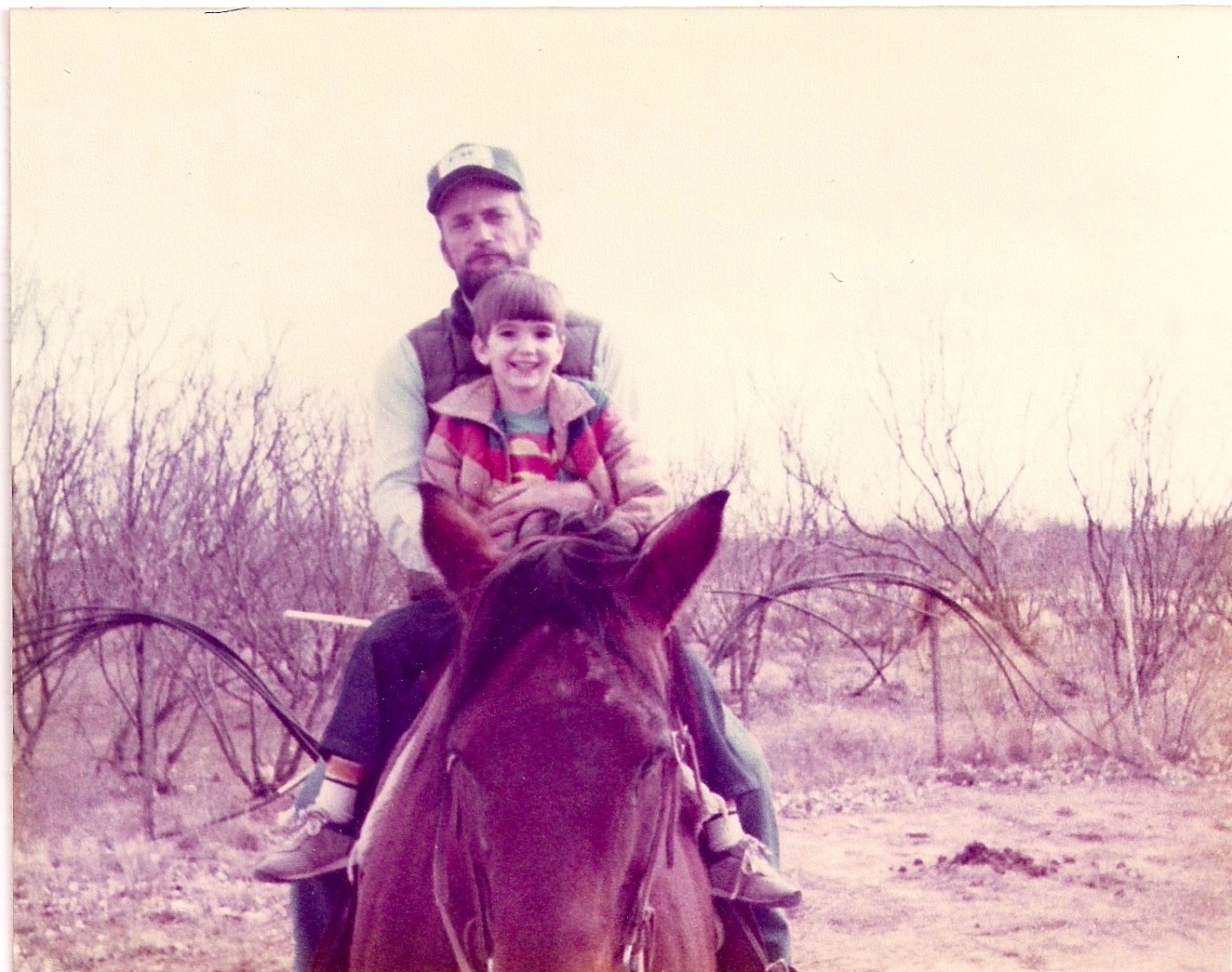
  • I also have taken over managing my Dad's (and Granddad's and Great-Granddad's) farm and ranch business. During the Sabbatical, I was surprised to discover how much I enjoyed getting my feet wet in those tasks. I often don't know what I'm doing, but I like it! Thankfully, I have very capable and dependable people helping me and knowledgeable friends to ask questions of when I'm out of my league.
  • What I'm viewing as the third part of my work is to get to do things I've wanted to do for a long time, especially writing. Most of that takes place through this blog, but I've also submitted a book proposal and have some other projects in mind which I'm looking forward to pursuing. Writing doesn't do much to help me pay the bills, but I really like the process of doing it, even if it ends up that hardly anyone beyond my wife and Mom end up reading something.
This is no way proves that we haven't lost our minds, but hopefully it at least helps any of you who may have wondered about us to know a little bit more of the story.