
Book Review: The Liturgical Year by Joan Chittister


A very meaningful practice in my Christian life over the past several years has been beginning to learn and follow the Christian Year. This can mean varying things in different traditions, but the essence of it is shaping our lives, Scripture readings, and worship around an annual cycle primarily based on the events of Jesus' life. All Christians do this to varying degrees, at the minimum recognizing Christmas and Easter, or on the other end of the spectrum having a calendar full of feast days, fast days, and other things that may seem foreign even to many long-time Christians. Since I'm a United Methodist, we fall in the middle (as we almost always do). So my practice of following the Christian year mainly consists of observing the seasons of Advent, Lent, and Easter, along with the special days included in them, as well as following the readings of the Revised Common Lectionary. Doing so has been very meaningful to me, because it's taken me out of the driver's seat of my own spiritual journey ("So what do I feel like reading today?"), and has given me a very practical way of seeking to immerse the story of my life in the story of the life of Jesus. I've gotten enough of a taste of it that I want to go much further.

That's why I was eager to read [amazon_link id="0849946077" target="_blank" ]The Liturgical Year[/amazon_link] by Joan Chittister. It's part of The Ancient Practices Series, edited by Phyllis Tickle, whose guides for fixed-hour prayer (The Divine Hours series) have been very helpful to me and thousands of others. I'd also already read Scot McKnight's excellent book from the series, Fasting, so I was excited to explore another of the series' titles.

The book is 231 pages, but broken up into 33 very short and readable chapters. Chittister begins with some background information on the Christian Year (or, the Liturgical Year as is her preferred term), which she describes as "the spiraling adventure of the spiritual life." If you're from a tradition closer to the end of the spectrum that doesn't get very involved, for example, in observances of Lent or Advent, and only includes Christmas Day and Easter Day in your annual calendar (and possibly something on Good Friday), it would be enlightening to you to read these first chapters. If you're on the other end of the spectrum, the things you already do will become more meaningful. Chittister weaves historical background of the liturgical observances with her own reflections and provides a convincing case for how following this annual calendar helps us to continue living ever more fully into Jesus' story.

The introductory chapters are followed by a journey through the markers of the Christian year. Beginning with Advent, then going through Christmas and Epiphany, into Lent and Easter, with stretches of "Ordinary Time" in between the seasons, Chittister helps us to understand the origin of each of the observances, along with many of the worship rituals traditionally practiced with each one.

I read this book because I hoped that a greater understanding of each of these markers in our year would add depth to my practice of them, rather than- as I had done for so long- simply going along with the flow in my church and doing things but having no earthly idea why we did them. The book will help me to do so during the rest of my Christian years, and could do so for you as well.

A good example is Ash Wednesday, the first day of Lent. Even if you're not from a church that observes it, you've likely noticed people once each year who walk around with ashes on their foreheads. It's something that millions of Christians do, but where in the world did we get such a tradition, and why do millions continue to practice it?

Chittister explains that Ash Wednesday is:

an echo of the Hebrew Testament's ancient call to sackcloth and ashes [and] a continuing cry across the centuries that life is transient, that change is urgent. We don't have enough time to waste on nothingness. We need to repent our dillydallying on the road to God... We need to get back in touch with our souls. "Remember man that you are dust and unto dust you shall return," [we heard] as the ashes trickled down our foreheads. We hear now, as Jesus proclaimed in Galilee, "Turn away from sin and believe the good news" (Mark 1:15). Ash Wednesday confronts us with what we have become and prods us to do better. Indeed, Lent... is about opening our hearts one more time to the Word of God  in the hope that, this time, hearing it anew, we might allow ourselves to become new as a result of it. (118-119)

For every point along the journey, she provides helpful background, reflections, and guidance so that her readers can enter more fully and meaningfully into joining two millennia of other Christians who have followed an annual cycle of remembering and celebrating the life of Jesus.

Being a Roman Catholic, her annual journey has quite a few more markers than mine does, but she helped in adding meaning to the days and seasons that are a part of the customs of my tradition as well as helping me to know the meaning behind practices of my siblings in other branches of our faith.

Click here to view [amazon_link id="0849946077" target="_blank" ]The Liturgical Year[/amazon_link] on Amazon.

Disclosure of Material Connection: I received this book free from the publisher through the BookSneeze.com book review bloggers program. I was not required to write a positive review. The opinions I have expressed are my own.

If you purchase resources linked to from this blog, I may receive an “affiliate commission.” I am disclosing this in accordance with the Federal Trade Commission’s 16 CFR, Part 255: “Guides Concerning the Use of Endorsements and Testimonials in Advertising.”

Regardless of whether I receive a commission, I only recommend products or services I use personally and believe will be good for my readers.

A Prayer for the Twenty-Sixth Sunday of Ordinary Time (Year A)

[This is one of a series of Prayers for the Christian Year. To see the other posts, click here.] Living, loving Father,

We remember how You have worked to bring us to this point today. You have been faithful to us in good times and bad, just as you were to those who have gone before us and to everyone who has ever looked to You. Even at times when it has seemed that all hope was lost, You have given us hope and life in abundance, giving us the water we needed when all we could see were rocks in the desert.

Lord, we will not forget Your faithfulness to us, that it was You who brought us into life and who has never left us alone in anything we have done.

When we forget You, we grumble, worried about our own needs being met. But when we remember You, and even learn to think like You, we realize there is a better way. We can look to the interests of others rather than our own. We can regard others as better than ourselves, rather than acting out of selfish ambition or vain conceit.

We can live the kind of life that we have seen lived by Your Son, our Savior, Jesus, who emptied Himself to be one of us even though that led Him to the cross. It is to His name that we kneel with our knees, and that we confess as Lord with our tongues, together with all of creation.

Help us to recognize the people and works in our world today which resemble the way that Jesus lived and worked among us so long ago. And when we see them, help us to be quick to respond obeying His command to love one another and following His example of how that can be done.

It is as we continue to seek to learn to live our lives from Him, as His disciples, that we again pray the prayer that He taught us, saying

Our Father in heaven, hallowed be Your name, Your kingdom come, Your will be done,  on earth as in heaven.

Give us today our daily bread.

Forgive us our sins as we forgive those who sin against us.

Save us from the time of trial and deliver us from evil.

For the kingdom, the power, and the glory are Yours now and for ever. Amen

Notes:

Depending on which system of ordering one pays attention to, this Sunday can also be referred to as Proper 21, or (in 2011) the Fifteenth Sunday after Pentecost. Regardless of the system, the readings are the same. So, the readings for this week, on which this prayer is based, are:

  • Exodus 17:1-7: The fifth of nine consecutive readings from Exodus. In this passage, the Israelites are grumbling against Moses (and, by implication, against God) for bringing them out of Egypt into the desert "to kill us and our children and livestock with thirst." God then provides water for them to drink out of a rock.
  • Psalm 78:1-4, 12-16: Part of a psalm that recounts God's saving acts toward Israel throughout history. This week's section remembers how God miraculously saved the Israelites from slavery in Egypt, and how he guided and provided for them in the wilderness.
  • Philippians 2:1-13: The second of four consecutive readings from Philippians. In this classic passage, Paul encourages his readers to "let the same mind be in you that was in Christ Jesus," and gives a description of what that meant for Jesus and what it can mean for the rest of us. The passage concludes with Paul's exhortation to "work out your own salvation with fear and trembling, for it is God who is at work in you..."
  • Matthew 21:23-32: All of the gospel readings after Pentecost in Year A come from Matthew. This passage is the first of nine consecutive readings containing Jesus' teachings during the days of the week between his triumphal entry into Jerusalem (Sunday) and his arrest (Thursday night). Religious leaders try to trap Jesus with a question about his authority, and he responds by trapping them with a question about John the Baptist. He then tells a parable of two sons, one who does what his Father asked and one who doesn't, making the point that "the tax collectors and prostitutes are going into the kingdom of heaven ahead of you.

Am I Flourishing or Withering?

The state of my spiritual life, like the state of yours, is very simple: we’re either flourishing or we’re withering.


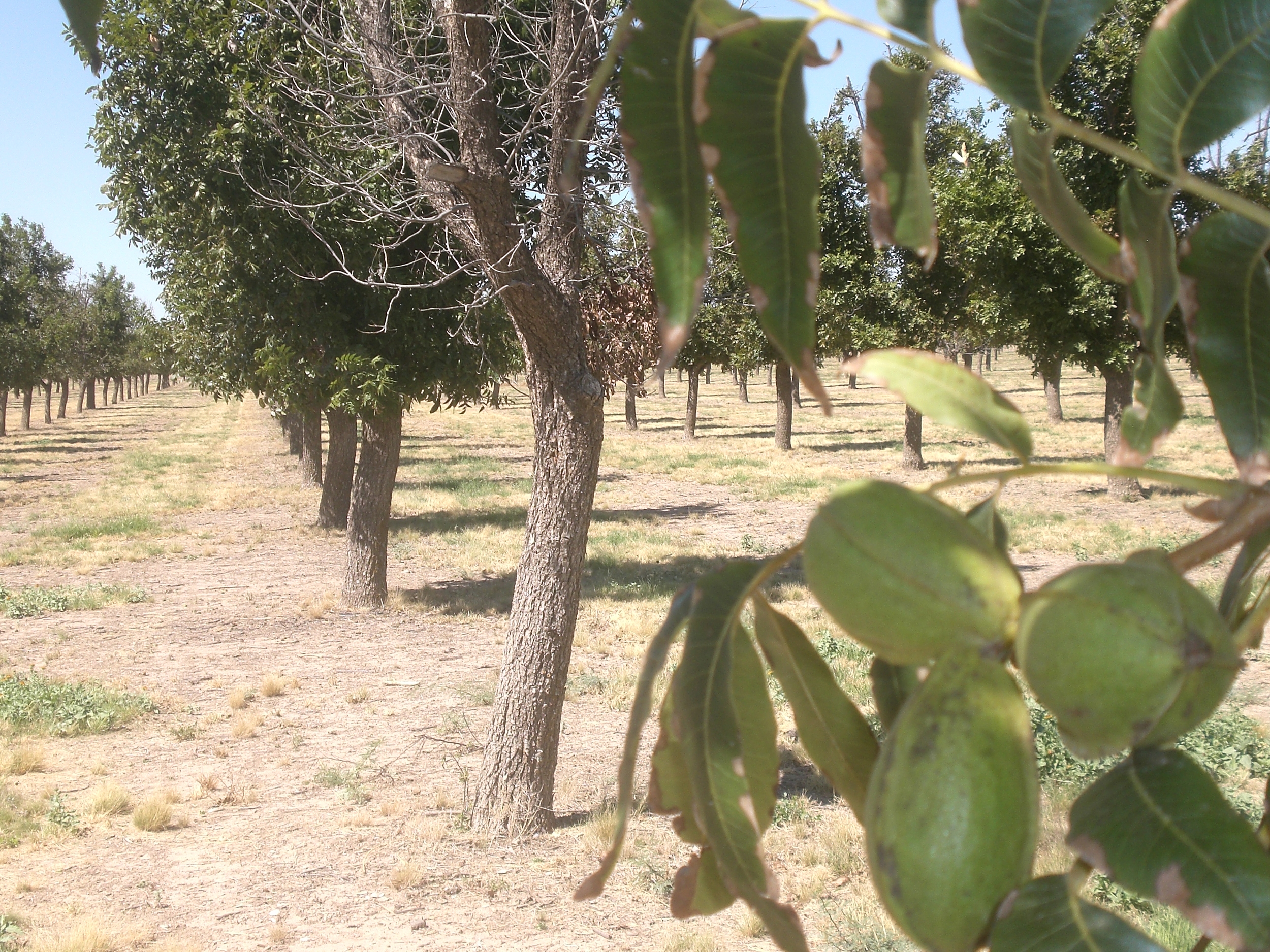
I can’t really explain why some of the pecan trees in our orchard are flourishing, with big, beautiful nuts on them, while others that were alive last year are now as dead as can be. Even if I can’t explain it, it’s a great visual reminder that my soul is constantly either being given life or having the life sucked out of it.

Over the years, I’ve learned to pay attention to a few indicators of my flourishing vs. my withering. You may have others you could add to your own list, but I would guess these are relevant to you too.

When I’m flourishing:

  • I’m more patient and less irritable.
  • Not getting my way on something bothers me less than it does at other times.
  • I’m much more able to enjoy time with my wife, my kids, and our family and friends, because I’m much more “there” with them rather than being distracted.
  • I sleep better, rather than having my mind racing at night trying to problem-solve even while I’m dreaming.
  • I don’t feel in a hurry.
  • I’m able to get the important things done and ignore stuff that doesn’t matter.

When I’m withering, the opposites of each of these things are true.

One of the puzzling things about these pecan trees is that they’re right next to each other. They received the same sunlight. They’ve both been irrigated. The exact same care has been given to both of them. Yet one is very alive and producing pecans that will be very tasty, while the other will become firewood.

A look at my spiritual life would be puzzling in the same way. God’s grace has always been available to me in super-abundance, with everything at hand that’s needed to live a life fully connected to God and others. At times my life has brought about some good things and I have loved God and people well. At other times, I haven’t had much life in me, but have only been dry and useless.

The good news is, that unlike a pecan tree, I have the response-ability to reconnect when I notice some of the warning signs of withering. I can put the conditions for growth back into place, and allow God’s good grace to have its effect on me.

What about you? Are you flourishing, or withering?

Abide in me as I abide in you. Just as the branch cannot bear fruit by itself unless it abides in the vine, neither can you unless you abide in me. I am the vine, you are the branches. Those who abide in me and I in them bear much fruit, because apart from me you can do nothing. Whoever does not abide in me is thrown away like a branch and withers; such branches are gathered, thrown into the fire, and burned. - John 15:4-6

How the Transforming Community Saved My Life

I began my two-year experience with Ruth Haley Barton's Transforming Community experience after having been in full-time ministry for a decade, and during those years I had largely bought into the lie that the kind of life with God that I deeply desired was a luxury which the demands of ministry said I could not afford. Although I would not have said it in these words, my lifestyle revealed that I believed practices such as taking a day to be alone with God were not really among the best uses of my time in seeking to advance the work of God’s kingdom among us.

The first Transforming Community retreat I attended focused on solitude and silence. After some initial teaching and times of prayer, we were given an extended period of time to be quiet and alone with God. When I arrived back in my room, I literally felt ecstatic to the point of jumping up and down. This was not because of any special experience or vision from God, but simply because though I had desired a life of intimacy with God for years, I had denied myself permission to pursue it in some of these most elemental practices handed down to us through the centuries. I was caught off-guard by my own elation, but it made sense once I realized that it had been eight years since I had last been on a retreat that gave me extended time for silence and being alone with God. I already had a master’s degree in spiritual formation and my denomination’s certification as a professional in the field, and yet I had starved myself of being alone with God for eight full years, and largely because of my feeling that the demands of ministry were too important for me to indulge myself in practices such as those.

As I signed my name on the Transforming Community’s group commitments, including that I would spend time in solitude regularly rather than starving myself for another eight years, I felt that I had finally been given permission, by a group of others who knew the same demands of ministry that I did, to live my life in a way that was consistent with my desire for God rather than continuing to deny it for the sake of ministry. That felt monumentally good.

When I received that permission to rearrange my life around my desire for God, I had no idea that the events of life would unfold in such a way that I would desperately need the lifeline that the Transforming Community would provide me through its practices and relationships over the next two years. Ministry circumstances during that time were the most difficult that I had faced in my decade of ministry. Simultaneously facing those pressures of my work and going through a period of intense personal grief and family stress upon my father’s diagnosis of terminal cancer and his death six months later was too much for me to handle. Depression came and I felt as if life was being squeezed out of me.

If at the same time, I had not also been in the Transforming Community... Well, there is no way of knowing for sure how things would have been different, but I am convinced that I would have been dragged some place emotionally and spiritually where I never want to go.

I cannot overstate the value of the Transforming Community consistently providing me with solid , challenging teaching which helped me to develop skills in discernment and led me to find a path of ministry much more authentic and aligned with God’s work in me than the direction I had been headed.

I cannot express the value of the relationships with people who mentored me, prodded me, encouraged me, and listened to me in the midst of the pain I was experiencing.

Perhaps most significant of all, I will never fully know the extent to which I was sustained and held up through the way that the community and its leadership prayed for me personally. It felt at times as if I could not stand, but this community stood for me through their prayers.

I am now more than six months removed from the completion of my two years in the Transforming Community. My life is now arranged dramatically different from the way that it was when I attended that first retreat on solitude and silence. My family, all of those to whom I minister, and I are all much better off because of the changes we have made.

If I had not been in the Transforming Community during these two years of my life, perhaps God may have sent another lifeline my way. I am profoundly grateful that I will never have to know if that is true.

Want to know more?:

Need a Retreat?

Part of my new work roles that I'm enjoying so much includes leading 3-4 retreats per year through our church, and I'm very excited about the first one coming up in October. Three Ways to Pray will be an experiential introduction to historic practices of prayer.

The details and registration are available by clicking here. I would love to have you join us, whether your church home is the same as ours or somewhere else. If you have any questions, feel free to email me.