[This post is one of a series of potential Christian plaques that we would never find at a Christian bookstore. See the rest of the list here.]
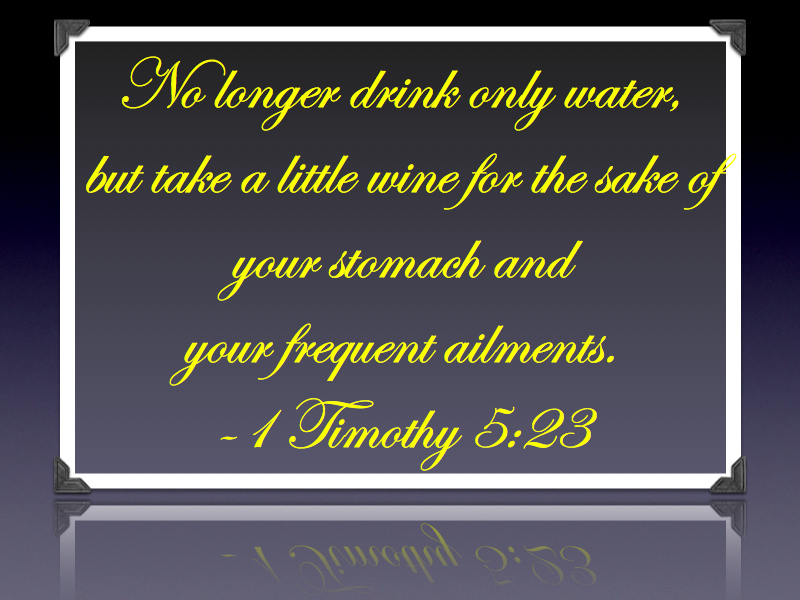
No offense to my beloved family, I'm just quoting the words of our Lord...

Your Custom Text Here
[This post is one of a series of potential Christian plaques that we would never find at a Christian bookstore. See the rest of the list here.]
No offense to my beloved family, I'm just quoting the words of our Lord...

[This post is the first of a series of potential Christian plaques that we would never find at a Christian bookstore. See the other posts listed at the bottom of this one.]
For some time, I've entertained myself with thoughts of making a collection of verses from the scripture that are legitimately in the Bible, but nonetheless would never be engraved on a plaque for sale in a Christian bookstore.
And I begin with a classic:
My complete list (so far) of Christian plaques we'll never find at a Christian bookstore:

[This is one of the posts telling a story from the life of my Dad. Click here to see the others.]
My Dad has poured the majority of his adult life's work into his pecan orchard. It's a great place. 53 acres of land and about 2,600 trees in an area where we don't see much water or enjoy many trees is remarkable. More remarkable, though, is how peaceful it is there. It isn't very often in the kind of lives most of us lead that we get to be somewhere where it's quiet enough that we cannot hear the sound of any car, machine, or other person, but it's like that in the orchard. Often the only sound you'll hear is the breeze blowing in the trees. We had some friends in the orchard with us on Saturday, and we all noticed the lack of the sounds we were accustomed to and the presence of more natural ones. One of them said the breeze sounded like God was breathing on us. I'd never thought of it like that, but it's certainly a place where I've been aware of God's presence, so his description fits.
As we were there last weekend, I thought about how similar that orchard is to our lives in God, particularly in understanding God's role and our roles in our growth. There are plenty of things in nature that God has accomplished on his own, but that orchard isn't one of them; my Dad has put nearly 40 years of constant work into it. It would not have just popped up without him. Yet regardless of how much effort he put in, neither could my Dad make those trees grow. All that he has ever been able to do is to put into place the conditions in which growth will occur naturally. The planting, watering, pruning, and harvesting have all required his effort, but all of them together cannot produce a single pecan tree. My Dad has put in plenty of effort throughout the process, doing his part, in order to give nature the opportunity to do hers.
In her book, Sacred Rhythms, Ruth Haley Barton describes the same characteristic of the spiritual life: “In the end, this is the most hopeful thing any of us can say about spiritual transformation: I cannot transform myself, or anyone else for that matter. What I can do is create the conditions in which spiritual transformation can take place, by developing and maintaining a rhythm of spiritual practices that keep me open and available to God.”
That is what we do as Christians, "create the conditions... that keep us open and available to God." In fact, it is all that we do. It can, and will, take a lifetime of effort on our part, yet in what seems like a paradox, it requires much effort and yet we are utterly powerless to make ourselves grow in any measure. We cannot force any more love, joy, or peace into our lives. Thankfully, though, just as there are natural processes in place in nature that have allowed 53 acres of pecan trees to grow in this "dry and thirsty land," God's grace is dependably available to work in us when we arrange our lives accordingly. We have to put in effort throughout the process, doing our part, in order to give God the opportunity to do his.
"...work out your own salvation with fear and trembling, for it is God who is at work in you..." (Philippians 2:12-13)
[This is one of a series of posts related to the REVEAL Spiritual Life Survey. To see the others, click here.] Welcome to Churchville, Population 10. (Generally very good and likeable people.)

An exciting opportunity has come to Churchville, as electricity has become available to the residents.

Time passes, and a very interesting thing happens. Half of the residents of Churchville take advantage of the availability of electricity by bringing it into their homes. One of these comes to believe so strongly in the benefits of electricity that he (upper left) is willing to give anything for the sake of electricity and deeply desires for all of his neighbors to come to experience it as he has. The four others who have connected to electricity are also enthusiastic about it. It has dramatically changed how they live their everyday lives. This "connected" half of Churchville's population all exhibit a love of electricity and a high degree of hospitality toward and concern for their neighbors.
But half of our residents of Churchville have never chosen to connect their homes to the available electric current, and they have varying reasons. One of them simply isn't convinced that electricity exists. He says that his neighbors who claim to have electricity in their homes are just fooling themselves with wishful thinking. Yet, even though he thinks these five neighbors of his are living under a delusion, he remains in Churchville rather than leaving, because it's a good place to be.
The other four of our non-electric residents are a bit more of a puzzle. They believe in electricity, but for whatever reason still have yet to make the appropriate arrangements for it to come into their home. The most notable thing, though, was three of these four seem to be unaware that they are living without electricity! They talk and often act as if they have it in their homes, even to the point of occasionally buying an appliance or sending the electric company money for the bill they think they owe. (One of them even volunteers to serve on the board of the electric company.) Yet these three continue to go on with their electricity-less lives, with no realization that they could be living any differently.
Only one of the non-electric residents notices the gap between how she is living and what her life would be like with electricity. One of the "connected" neighbors gave her a light bulb, and she really wants more light in her house. Neighbors and electric company workers are confident that she will make the necessary arrangements and become connected soon.

So what's the point of the parable? I am a big fan of the REVEAL Spiritual Life Survey for churches. It seeks to give church leaders a measurable way of looking at how effectively they help people grow. Our church participated almost two years ago, and will take our second survey this fall to see how we have improved.
Our results indicate that somewhere close to 1/2 of our people have yet to significantly arrange their lives in ways that would make growth in their love for God and others natural. Also, of these, only about 1 in 5 recognize that things should be different.
Of all of the things that are presented to church leaders as worthy of our time and energy, nothing is more essential than this: modeling and communicating how profoundly good it is to live our lives fully in the kingdom of God, so that any others who desire to do so will know how, and that others will have a more accurate understanding of what it is they're being invited to in the Christian life.
"Jesus went into Galilee, proclaiming the good news: 'It's time. The kingdom of God is now available. Change your mind and direction and believe the good news." (Mark 1:15, paraphrase)
Among the friends I am privileged to have in Guatemala is a man I particularly enjoyed spending time with while we lived there, Elmer. Elmer is on staff at New Life Children's Home, where we were very thankful to have the opportunity to serve for two years. His job description there is hard to define: he is one of the workers who can drive, so he spends a lot of time fighting traffic in Guatemala City running errands for the home and also helps with maintenance and construction projects. More than those things, though, he is a mentor to many of the boys who live at NLCH.

Elmer, yo quería traducir esto en español también, pero ya es tarde y mi cabeza no me sirve. Te lo prometo que todo lo que dice es amable, ¡y no tenía que mentir! Que sepas que celebramos contigo. Que los estudios que has cumplido te sirven para seguir ayudando a otros conocer mejor al Señor, igual como me has ayudado a mí. Que nosotros dos siempre recuerdan que el éxito para un pastor es tener una relación viviente con Dios y la capacidad de pasarla a los demás, y también recordar que nuestros ministerios primarios siempre son nuestras esposas e hijos. Cualquiera cosa más de esto no es central. Hasta que nos vemos, mi hermano, que la gracia y paz de Jesucristo sean tuyos en abundancia.
[This is the first of a series of posts on completely unhelpful things to say to someone in grief. See the others at the bottom of this page.] Since learning of my Dad's cancer, we have had some very well-meaning people say utterly unhelpful things to us in an attempt to console us, or encourage us, or... something. In no means do I intend to be hard on these people. In ministry, I've been with people in life's worst moments and the search for something to say is inevitably difficult. Rather than being resentful of their comments, or intending to be critical, I've started keeping a list for two purposes: the humor of it, and so that I and others can learn more helpful ways of being with someone who's going through a bad time.
Third Place: "I have a cousin who several times in the [same body part as your loved one] has had to have a [different procedure than your loved one], and is doing just fine." Well, good for them. This is more rare and just as unhelpful as closely related comments, which consist of people's tendency to describe the worst thing they have ever heard of happening to someone in a similar situation to what you're describing. When we were preparing to move to Guatemala, we would often hear something like, "My brother-in-law's cousin went there in 1962 and got gangrene and he had to have several amputations." Or with medical issues, "Wow, you'd better get a second opinion, because a guy at work had that and he was gone a week later."
People do say these things out of genuine concern, either to point out something that may be a danger we haven't thought about or to try to assure us that things may turn out better than we're expecting. At least in the comment above, the person is trying to be positive. I really was glad to hear that their cousin was doing fine, but it was not relevant to my situation, and didn't serve to encourage me like they'd hoped. Whether it's the positive or negative form of the comment, whatever happened to the person that you've heard of (whether they got better or came to a horrific end), they are not the same person, nor facing the same situation, and therefore probably will not have the same outcome as the person I'm talking about.
Second Place: "Sometimes you just have to have a good attitude about these things." I'm not sure how to have a good attitude about losing someone that I love, but thanks for the suggestion. If I give the benefit of the doubt here, I'll say that the intent was to point out how much the way we choose to look at a situation impacts us. For example, it's my choice whether I will only think about the sad parts of losing my Dad or whether I will think about how grateful I am for his life and example and continue looking for ways to treasure the time we have left together. I've had to learn to pay attention to how much the way that I approach this situation mentally makes a difference.
I guess that may be what they meant, but it came across as if the person was telling me, "Buck up and get over it. Everybody goes through stuff." Not helpful.
First Place: "I know what it's like. I've sat in your seat twice. Actually three times." The biggest lesson I've learned in dealing with people through this is our tendency to try to communicate to someone else that we know what they're going through, but how that is never true. Although you may have lost someone, even in a similar way, you have never lost the person I am losing just like I never lost the person you did. None of us have really ever sat in another person's seat, walked in their shoes, etc. Even within a family, everyone has their own relationships with everyone else. My brothers' relationships with my Dad are similar to mine, but not the same. We all have different memories, experiences, etc., so none of us are in one another's seats.
I certainly can't condemn any of these comments, because I haven't done any better in trying to console people. Especially with this grand-prize winner, because I know that I have said to people at times, "I know what it's like to go through that." We want very much to assure people that they aren't alone and that there is life on the other side of awful situations, but the reason that I, or anyone, is in grief, is because the person we're losing is like no one else. Our relationship with them cannot be replaced, and so the well-intended comparison to someone else's situation just isn't the same thing.
Not all of the comments we've received have been unhelpful. The things that actually give comfort are simple and go something like this: "That stinks, Daniel." I realize that another person cannot fix the situation, and I don't expect them to do so. What I most need is for others to acknowledge that the situation is hard and sad, that I won't always be able to function as if it isn't happening, and that even though it can't hurt them in the same way it hurts me, they recognize that it stinks. These kinds of comments, along with people just continuing to be present, check in with us, and continue being our friends as they always have been are what helps, and I hope to learn from them. Other ways that people have done this are:
Being in ministry in a situation like mine requires doing a wide variety of things (often with opportunities to dabble in new areas of my incompetence), but among the things that I do, there is one that stands out to me above the rest as
 , The Good and Beautiful Life
 , and The Good and Beautiful Community
 . A leaders' guide and other very helpful resources are available for free at www.apprenticeofjesus.org.