

What REVEAL Can't Reveal

[This is one of a series of posts related to the REVEAL Spiritual Life Survey. To see the others, click here.]

I am a big fan of the REVEAL Spiritual Life Survey produced for churches by the Willow Creek Association. I have invested a lot of my time and energy in digging into its findings and helping other people to do so; I've tried to be creative in communicating some of the things we learned by writing A Parable of Churchville; my endorsement of REVEAL is even printed inside the third book on their research, Focus. The work they are doing is unprecedented, and church leaders will be much better off to learn from their general findings, published so far in three very quick reads (Reveal, Follow Me, and Focus), as well as to see what the survey finds about their own specific congregations.

After being pretty immersed over the past 2 1/2 years in any information I could find about REVEAL as well as my own church's data, I've noticed something that's lacking. (The lack isn't in the survey, but in me.)REVEAL gives church leaders insights like we've never had before into what is going on inside of the people in their churches, what they're looking for, what they really need, and specifics about what will be most effective at helping them grow in their love for God and for other people. The problem (to no fault of the survey, because it isn't supposed to serve this purpose) is that all of these insights can keep a pastor's focus on obstacles to spiritual growth that are exterior to him or her.

In other, more direct, words, REVEAL cannot reveal any insights like these to a pastor:

  • It has been years since your church's staff members have had any time in solitude with God.
  • The speed of your church's programming schedule allows no room for you, your staff, or your lay leaders to learn the ancient discipline of resting in God.
  • Although you may be highly effective at teaching others about God and the spiritual life, rather than enjoying your own relationship with God, you use ministry to avoid ever having to be alone with him.
  • The most vital factor in a church's effectiveness at helping people to grow is the quality of your friendship with God.
  • Your staff have never learned to be discerning in their own lives and can therefore be very dangerous to themselves and others when making decisions that affect the entire congregation.

REVEAL will make a church's leadership face some great questions, like "Are the things we're putting so much time, energy, and resources into actually and predictably helping people grow?", "Which ones should we keep doing?", and "Which ones should we stop?" And the focus is certainly not all external; it does have some detailed analysis of people's perception of their senior pastor and the research lays a strong emphasis on the importance of staff modeling in their own lives how to grow.

Yet leaders who have become accustomed to looking for programmatic answers to problems before waiting on God for them will still easily find ways to focus on what the data says are the problems "out there" in the congregation rather in "right here" in the hearts and lifestyles of the people in the highest levels of leadership.

In a great article available here, Ruth Haley Barton says, "Spiritual transformation in your church or organization begins with you and your transformation. Any additional strategy must and will come quite naturally after that." Leaders should keep that constantly in mind, focusing first on helping one another learn to live more fully in God's kingdom together before digging in to all of the exterior insights that REVEAL can provide.

So, if you have any influence in your church and are someone other than one of the pastors, you can do a couple of very important things: Encourage your pastor to learn about and participate in REVEAL, if your church is not already doing so. Also, do everything possible to help your pastor(s) be assured that they are in an environment where cultivating their own intimacy with God is not a luxury for them to attend to when time is left over from the real work that they do. Rather, use your influence to communicate to them that "no time is more profitably spent than that used to heighten the quality of an intimate walk with God" (Dallas Willard- read the entire article here). As someone who is being pastored and shaped by them, your own well-being depends heavily upon this.

A very practical way to do this is to make it possible for your pastor(s) to participate in a community where their own spiritual formation is the focus. I have recently finished a Transforming Community with Ruth Haley Barton and benefited greatly from it. Renovaré and The Upper Room also have good opportunities available.

If you are a pastor, you may or may not have control over whether or not you can participate in something like this. If you can't, you must find ways to cultivate your own life with God through practices such as Sabbath-keeping, solitude, and silence, and involve others in your efforts to do so. As Dallas Willard says in his penetrating article, The Key to the Keys of the Kingdom:

A response to giving attention to personal soul care often is, “I don't have time for extensive solitude and silence. I have too much to do.” The truth is you don't have time not to practice solitude and silence. No time is more profitably spent than that used to heighten the quality of an intimate walk with God. If we think otherwise, we have been badly educated. The real question is, “Will we take time to do what is necessary for an abundant life and an abundant ministry, or will we try to 'get by' without it?”

So a couple of words of counsel are appropriate for our attending to the inner life. First, God never gives anyone too much to do. We do that to ourselves or allow others to do it to us. We may be showing our lack of confidence in God's power and goodness, though it may be that our models and education have failed us. Second, the exercise of God's power in ministry never, by itself, amends character, and it rarely makes up for our own foolishness. God's power can be actively and wisely sought and received by us only as we seek to grow by grace into Christlikeness. Power with Christlike character is God's unbeatable combination of triumphant life in the kingdom of God on earth and forever. Power without Christ's character gives us our modern-day Sampsons and Sauls.
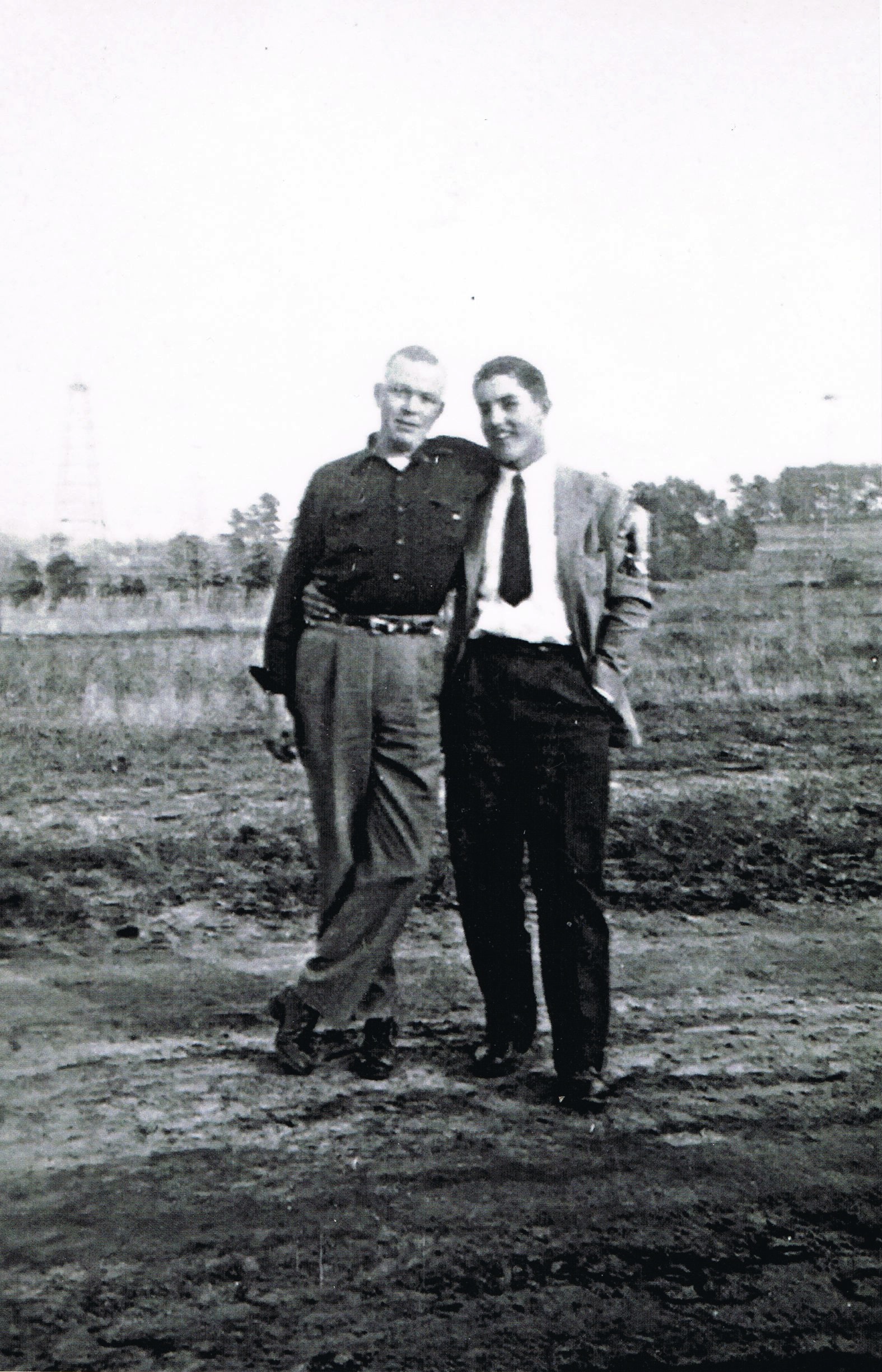
 

What Made Him Who He Was

[This is the fifth post on the life of Chester Tyra. Also see the previous posts: The Man Who Never Had a Bad Day, Think of the Difference You'd Make to the One Who Needs It, My Name is Daniel, and I was His Best Friend too, and FUN.]

In previous posts, I've written about how over the years of Chester's life, his habits added up to make him who he was. I very much want to have his habits of generosity, hospitality, joy, and fun in my life, and as I've thought about Chester's life, I’ve also noticed a connection between these those habits that may not seem apparent at first.

I really believe there’s one simple and profound reason that made it possible for Chester to bring so much joy and fun into people’s lives, for him to be so welcoming to me and others to come into his life, and for him to be so generous toward others: I honestly think that reason is, because perhaps more than anyone else I have ever known, Chester had a deep and genuine trust in God’s goodness toward him.

Chester was the man who never had a bad day. He knew before any day started that that day was going to be a good day, simply because he was alive. And he knew afterward that he’d never had a bad day, not because he was naive about anything happening, but because of a deeper level of trust that, regardless of what had happened in that day, things would be okay.

Trusting in God’s goodness to us opens the doors for us to be generous, because we don’t have to be concerned about not having enough of something once we realize that God is our provider. Chester could give generously to others, and welcome others so warmly into his life, because he knew that there is no reason to fear running out of the good things of life if we give them away to others. God’s goodness never ends, and therefore there is simply never any less left when we find ways to pass it on to others.

The 23rd Psalm ("The Lord is my Shepherd; I shall not be in want...") is one that we often read together at funerals, and appropriately so. But even though it’s one of the most well-known and widely-loved passages of the Bible, I think that since we hear it so often in situations where people are hurting, we’ve come to think that it’s only a psalm about God helping us through our pain. There’s much more than that to it, though. It speaks in great imagery of God’s abundant generosity toward us, of how David was welcomed so warmly into God’s home, and how regardless of what the circumstances brought, he was able to enjoy life because of the way that he had always experienced and come to trust in God’s profound goodness toward him.

David had experienced repeatedly what Psalm 118 affirms in The Message: His love never quits. His love never quits. His love never quits. I can imagine David on the day that he wrote Psalm 23, perhaps waking up after spending the night hiding in a cave because of the people who were out to take his life without reason. Yet on that morning because of the steadfast love and goodness of God that he had always known, David could have awoken and and said to himself the same thing Chester would have said, “Today’s going to be a good day.” Because God’s love never quits. God’s goodness is inexhaustible. And even though he knew that day might be the last day of his life, he still had such a desire to express his gratitude to God for his unfailing goodness, that David began writing those words, “The Lord is my Shepherd. I shall not be in want...”

Sometimes words can become so familiar to us that we can miss their meaning, so sometimes it is very helpful for us to encounter a passage of scripture in different words than the ones we're used to. The Message's wording of Psalm 23 helps us to see how God’s goodness is unlimited and spilling over in our lives. It helps us to know that God’s love never quits. And if you and I can allow these words to sink deeply enough into our souls, we will know something that both Chester Tyra and King David knew in a very central part of who they were: that God, his world, and our lives in it are utterly good.

Psalm 23 A David Psalm

1-3 God, my shepherd! I don't need a thing. You have bedded me down in lush meadows, you find me quiet pools to drink from. True to your word, you let me catch my breath and send me in the right direction.

4 Even when the way goes through Death Valley, I'm not afraid when you walk at my side. Your trusty shepherd's crook makes me feel secure.

5 You serve me a six-course dinner right in front of my enemies. You revive my drooping head; my cup brims with blessing.

6 Your beauty and love chase after me every day of my life. I'm back home in the house of God for the rest of my life. (Psalm 23, The Message)

The Most Important Word You May Have Said Today

  Today, millions of Christians around the world have participated in a greeting very much like this:

Greeting: Christ is risen! Response: Christ is risen indeed!

Perhaps you were one who said this. We call this the Paschal Greeting, and it has been said by Christians to one another on Easter morning (and other days) for centuries, in hundreds of languages. While all four of the words carry significant meaning, the word that caught my attention as we said it today was the last one: "indeed."

"Indeed" says that this really happened, and that all of the Christians who have said it to one another throughout all of their times and cultures have done so for a specific reason:

Because there was a historical Sunday morning, when a real woman with a shady past went to look for the physical, human corpse of a Jewish teacher from Nazareth whom she had seen be executed and laid in an actual tomb, but the body was not there.

And Christians like me have said these words to one another for so long, and included the word "indeed," because we believe that he who was dead really was alive again. "Indeed."

I'm very glad that someone centuries ago thought it important to include "indeed" in this greeting. It means that we are not saying to one another:

"Christ has risen! Maybe so!"

nor: "Christ has risen! Doesn't that sound nice?"

nor: "Christ has risen! And it makes me feel so good!"

nor: "Christ has risen! And the moral of the story is..."

No, when we say these words, we are saying that a day actually happened when, if we would have been there, we would have seen it with our eyes.

"Indeed" really matters, because it reminds us that as much as theology is important stuff in Christianity, so is history. If Christ's rising were not "indeed," there should be no Christianity, and we should give up our 21 centuries of fascination with this rabbi. But if it happened "indeed," everything else about our lives needs to be evaluated in light of what Mary Magdalene experienced that Sunday morning near Jerusalem. We need to start and end all of our theology by looking at this man who lived, died, then was alive again. Because he was human like us, we need to learn to live the way that he showed and taught us, and because he was uniquely divine, we need to remain focused on him as on no one else.

What difference would it make to you if we didn't say "indeed"? What else does "indeed" mean to us?

I Would Have Been on the Wrong Side of This

As we have moved through Holy Week so far, particularly through Maundy Thursday last night and Good Friday today, I've been dwelling on a couple of things:

First, I've never noticed before how fast things happened. Perhaps that's because as we read the gospels, the events of yesterday and today take up a lot of space. Compared to the speed of the narrative of most of Jesus' life, once we get to Thursday and Friday of this week, the speed of the narrative slows dramatically, particularly in John. Of the 21 chapters, 1/3 of them (chapters 13-19) are filled with the content of these 24 hours.

This makes the pace seem slower when reading the story, as we read about Jesus getting passed back and forth between people, Pilate trying to figure out what to do with him, and the religious leaders working the political system to get their desired result ("You are no friend of Caesar... We have no king but Caesar."). Yet despite the change in pace of the narrative, the reality is that Thursday evening Jesus was having dinner with his friends- including Judas. By mid-afternoon on Friday both Judas and Jesus were dead. It happened very fast.

As I've tried to let these stories sink in and picture the scenes of the Last Supper, Jesus' trial with the Sanhedrin, Peter's denial, the crowd's choice of Barabbus and insistence on Jesus' death, I've realized something: If I had been there and been a character in the story, or even just a face in the crowd, it's silly to think that I would have done anything differently from what everyone else did. I too would have been on the wrong side of the story and left Jesus alone.

I might have been one of those who loved Jesus but for various reasons couldn't do anything about what was happening, and therefore had to let it happen. Those such as Mary his mother, Mary Magdalene, John, Joseph of Arimathea, or Nicodemus surely hated what they saw happening but felt some inevitable sense of resignation to the way things were playing out so quickly.

Or I might have been someone who more actively turned my back and ran from Jesus, like most of his friends. I may have even done what Peter did and tried to cover up any tracks that I'd had with him. Based on my own history in circumstances much less intense that what Peter faced that night, I don't have much reason to think I would do any better than he did.

Or I might have been Judas. It's easy to believe that I could have been more interested in my own plan than Jesus' way of getting things done. Like Judas, I too have been disappointed with God at times, feeling that he didn't come through as he should have, so who's to say that I wouldn't have been the one to seek personal gain as a result of Jesus not turning out to be and do what I had hoped?

Regardless of what role I would have played, I would have been among those included in Jesus' statement, "you all will leave me alone. Yet I am not alone, for my Father is with me."

I would have been somewhere on the wrong side of this horrible drama. And Jesus would have known that, and even in his most agonizing hours which I helped to bring about, he would have loved me anyway.

A Prayer for Good Friday

"Almighty God, we pray you graciously to behold this your family,for whom our Lord Jesus Christ was willing to be betrayed, and given into the hands of sinners, and to suffer death upon the cross; who now lives and reigns with you and the Holy Spirit, one God, for ever and ever. Amen."

- From The Book of Common Prayer

Wesley's Sermon 16: The Means of Grace

"Let all, therefore, who truly desire the grace of God, eat of that bread, and drink of that cup."

[This is a post on one of John Wesley's Sermons as part of the Getting to Know John series. See the other posts here.]

Because the Lord's Supper is so central to Wesleyan and early Methodist spirituality, it's appropriate that posting on this sermon falls today, on Maundy Thursday, when we remember Jesus' last supper with his disciples and the beginning of the Christian church's sacrament of Holy Communion. If there is any day when we should practice a combination of all three of the means of grace Wesley focuses on in this sermon (prayer, searching the Scriptures, and receiving the Lord's Supper), we should do so today.

This is a great sermon, and it is key to understanding John Wesley and the meaning of Methodism. Practicing the means of grace (or, in his language, "attending upon all the ordinances of God") was one of the three General Rules that made up the lifestyle that the early Methodists agreed to live by. Doing what Wesley describes in this sermon, combined with commitments to do good for others and avoid doing any harm were what it meant to be a Methodist in Wesley's day (as well as participation in Methodist groups), and they still form a reliable framework for how we can shape our lives today.

I wish that the sermon described more of what grace meant for Wesley, but apparently its definition was known well enough by his audience that there was no need to include a description. The need is tremendous in our day, though, because its meaning has been reduced drastically between his time and ours. Today, we often equate God's grace with his willingness to forgive our sins. That certainly is gracious of God, but his grace is much bigger than that. When grace is only forgiveness, the very phrase, "means of grace" makes no sense. How can doing these things be a means of God's forgiveness? That is far from the intended meaning.

Dallas Willard says that grace is God's action in our lives to bring about what we do not deserve and cannot accomplish on our own. That's a much bigger (much more Wesleyan and much more Biblical) understanding of grace. When we understand it in this way, we can see how prayer, "searching the Scripture," and receiving the Lord's Supper are essential ways that we open doors in our lives to God's work in us.

Wesley spends much of the sermon addressing the theologies of his day which questioned whether outward things that we do have any role in the Christian life. Although the questions would be phrased differently today, they're still very applicable. Is doing these things necessary for Christians? Wesley lays the groundwork for an unequivocal "Yes" which is utterly dependent on God's grace.

If you consider yourself a Methodist, or if you may already be one and don't know it, you will do well to dig in to this sermon.

You can download my ePub file of the sermon to read on electronic devices, read the entire text online, or just review my outline of the sermon.

A Wesleyan Hymn for today and for this sermon:

Because Thou Hast Said Charles Wesley, 1748

1. Because thou hast said: "Do this for my sake," the mystical bread we gladly partake; we thirst for the Spirit that flows from above, and long to inherit thy fullness of love.

2. 'Tis here we look up and grasp at thy mind, 'tis here that we hope thine image to find; the means of bestowing thy gifts we embrace; but all things are owing to Jesus' grace.